Lost Storage Unit Key in NYC: Who Can Cut the Lock, and When
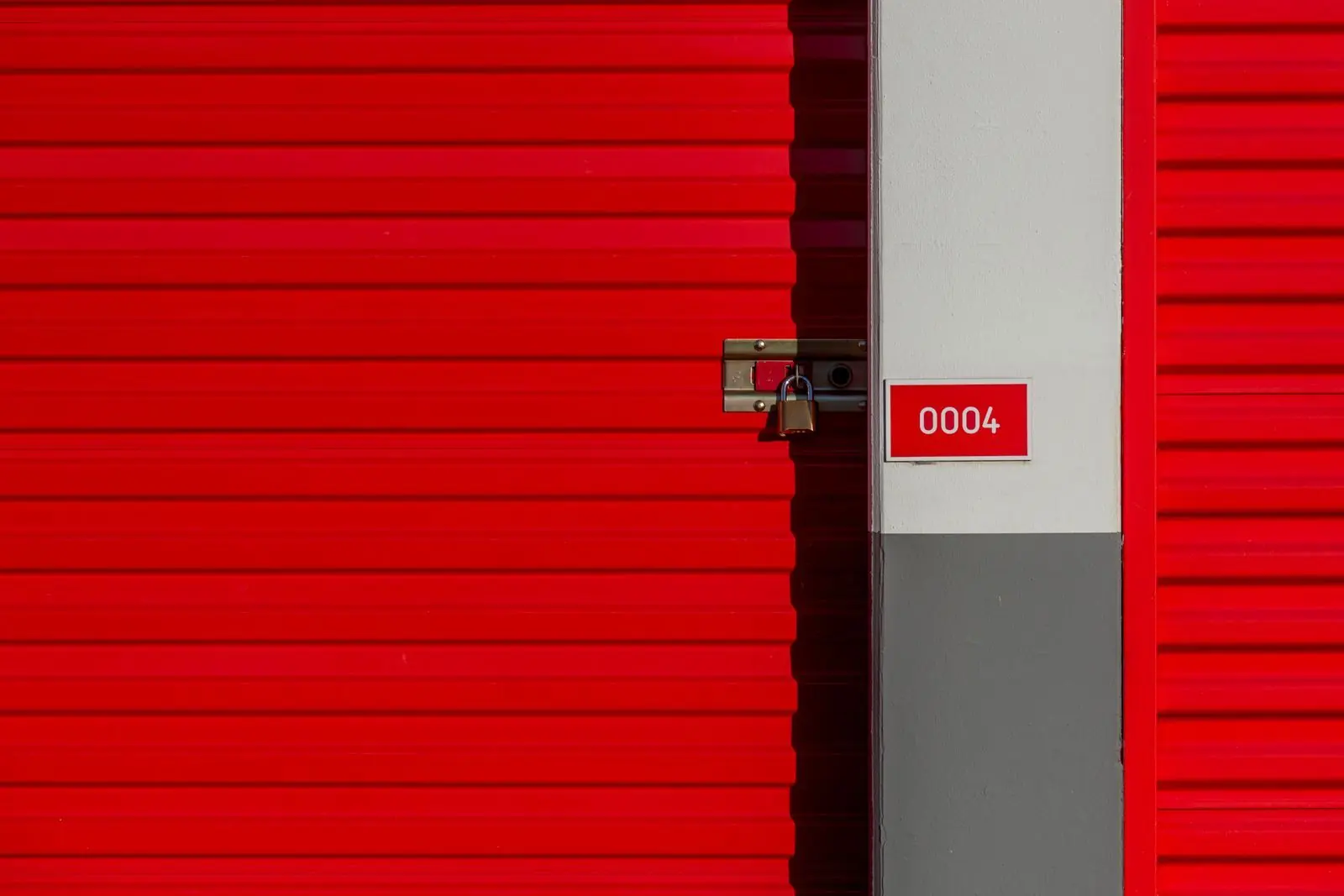
You are standing in a storage hallway in Long Island City or on the West Side, the dolly is waiting, and the key to your unit is not on the ring. Or it is, and the disc lock will not turn.
The direct answer: go to the facility office before anyone touches the lock. The facility controls who opens your unit, most of the big operators' own pages point you to their staff first, and a locksmith who arrives without the office's approval may not get past the front desk.
The facility decides who cuts the lock
You rent space under the facility's agreement, and its staff decide how a lock comes off. The large operators say so on their own pages:
- Extra Space Storage tells renters who lost or forgot a key, or whose lock is broken, to contact the storage facility manager immediately. It adds that "for security reasons, tenants aren't able to cut or break their own locks."
- Public Storage answers a lost key with one line: "Please contact us to schedule a lock cut."
- U-Haul staff, answering renters on its disc lock product page, tell people asking about cutting their own lock at a storage location to speak to the general manager there about the proper procedures. The same page says U-Haul does not create or provide duplicate keys for its locks, so there is no spare to order, and in other answers its staff suggest a local locksmith for removing a lock whose keys are lost.
- CubeSmart's rules and regulations recommend replacing your lock immediately if you lose a key, and state that the owner "does not verify the authority of those entering Cubes with keys."
That last line is why a lost storage key is a security problem as well as an access problem: whoever holds it can open the lock.
Procedures differ by operator and by location, so ask your own office. If you are not the person on the rental agreement, raise that early. U-Haul says renters name the people who can access the unit and staff add them to the contract; whether an authorized user can also approve a lock cut is a question for the office, not something to assume.
If your "storage unit" is actually a cage in your apartment building's basement, the landlord or super controls it, not a storage company. The guide to padlocks for NYC storage units and building gates covers that setup.
Lost key or overlock: two different problems
Before planning a removal, look at the door. If there is a second lock on the latch that you did not put there, the facility has overlocked the unit, and no locksmith can or should help.
The operators describe overlocks on their own pages:
- Public Storage: "When there is an outstanding balance on your account or any other concern, a lock may be placed on your unit." Its extra lock help page says that once the account is current and concerns are resolved, staff remove the lock or give you a code to remove it.
- Extra Space's customer FAQ says that until a late balance is paid in full, gate access is removed and the unit is over-locked.
- CubeSmart's rules say that if rent is 30 days or more past due, the owner will remove the customer's lock to prepare for the sale of the contents. Its FAQ adds that a payment on a delinquent account made after business hours will not ensure overlock removal until the next business day.
Never cut, drill or tamper with a facility's overlock, and do not ask anyone to do it for you. The way off an overlock is the account: pay the balance, or dispute it with the office, and let staff take their lock off. A locksmith called to an overlocked unit is a trip charge spent on nothing.
What New York law lets a storage operator do
The rule for unpaid storage in New York is Lien Law § 182. It gives the owner of a self-storage facility a lien on the personal property stored there for occupancy fees and other charges, along with expenses for preserving the property and for its sale.
The owner can enforce that lien by a public or private sale on commercially reasonable terms, but only after notice. The statute says the notice must include:
- an itemized statement of the amount due and a description of the property
- the nature of the proposed sale and the time and place of the sale
- a demand for payment within a specified time of not less than thirty days from mailing
- a conspicuous statement that, unless you pay within that time, the goods will be advertised and sold
- a statement that anyone claiming an interest in the goods may bring a proceeding within ten days of service if they dispute the lien or the amount
The notice has to be delivered personally, sent by registered or certified mail to your last known address, or sent by verified mail and electronic mail. And once you pay the occupancy fees the section permits, refusing to hand over your goods counts as an "unlawful detention of goods" under the same section.
Two practical points follow. Keep your mailing address and email current with the facility, because that is where the notice goes. And if a notice arrives and you think the amount is wrong, the ten-day window it describes matters, so get advice quickly rather than waiting for the sale date.
Why disc and cylinder locks take longer, and why you bring a new lock
Two of the big operators point renters away from ordinary padlocks. U-Haul's self-storage FAQ says it requires a round discus style lock. Extra Space describes disc locks as the most common choice and says cylinder locks are often installed by the facility and fit directly into the door latch.
Disc locks hide the shackle. As U-Haul put it in an answer on its product page, on a storage door "the shackle of the lock is not exposed. Therefore, it cannot be cut with bolt cutters." Removal usually means picking, which can be slow on a good disc lock, or cutting or drilling through the hardened body. That takes power tools, care around the door and latch, and more time than snipping a padlock.
Cylinder locks have no shackle at all. They sit inside the latch, so the usual way out without a key is drilling the cylinder. If the facility installed it, the facility owns that decision. The replacement also has to fit: U-Haul notes that cylinder locks only work on units with cylinder lock hasps.
Standard padlocks with an exposed shackle are usually the quickest to remove, for the same reason they are easier for a thief to cut.
Whichever lock you have, plan on leaving with a new one: a cut or drilled lock is finished, and a lost key may still be in someone else's hands. Do not leave the unit open while you go shopping: CubeSmart's rules say the owner may put its own lock on any unit that is not secured and charge the customer for it. CubeSmart also requires locks to be shown to and approved by the general manager, so buy a replacement that meets your facility's rules before the visit, or ask the office what it sells.
A sequence that avoids paying twice
- Check the agreement and your account. If there is a balance, pay it or settle it with the office first. A lock cut will not get you past an overlock.
- Check office hours, not just access hours. U-Haul and CubeSmart both separate the hours you can enter with your gate code from the hours staff are on site. A lock removal needs staff, so plan for office hours.
- Bring ID and your rental details. Whoever removes the lock needs to know the unit is yours. If your ID is in the unit, tell the office before you go.
- Call the office first. Ask whether staff cut locks themselves and whether there is a charge, whether outside locksmiths are allowed, whether you must be present, and what lock you need afterward.
- Buy the replacement lock to the facility's specification, so the unit is secured the moment the old lock comes off.
- Book a locksmith only if the facility allows outside locksmiths. If it does, our lockout service in NYC lets you describe the door and the problem, check availability and review the estimate in the app before confirming. Mention the office's approval and whether it is a disc, cylinder or padlock.
The ways people pay twice are predictable. A locksmith is turned away at the desk and still bills the visit; the 2026 NYC locksmith cost guide puts the trip charge for a legitimate NYC locksmith at $40 to $80 on its own. Someone removes their own lock and then finds the overlock. A unit is left open and the facility's lock goes on the bill. Or a job is booked at night when the office is closed anyway, and the same guide puts after-hours surcharges at 25 to 50 percent.
Before you book anyone, run through the NYC locksmith verification checklist. And if the storage key was on the same ring as your apartment keys, the lost-key playbook for Manhattan covers the apartment side.
FAQ
What happens if you lose your storage unit key?
The lock usually has to come off and be replaced, and the facility decides how. Extra Space sends renters to the facility manager, Public Storage schedules a lock cut, and CubeSmart recommends replacing the lock immediately.
Can I cut the lock off my own storage unit?
Not without the facility's say-so. Extra Space says tenants are not able to cut or break their own locks, and U-Haul staff point renters to the location's general manager. A disc lock's hidden shackle also defeats bolt cutters, so a hardware-store attempt rarely works.
When can a storage unit lock you out?
When the account is behind, under the terms of your agreement. Public Storage, Extra Space and CubeSmart each describe placing an overlock or removing gate access over an unpaid balance. A sale of your property in New York requires the Lien Law § 182 notice described above, with at least thirty days from mailing to pay.
How much does storage unit lock removal cost?
It depends on who does it and on the lock. Ask the office whether it charges for a lock cut. For an outside locksmith, a disc or cylinder lock that needs drilling takes longer than a padlock, the replacement lock adds to the total, and the visit itself carries a trip charge.
Where LockAtlas fits
LockAtlas cannot authorize access to a storage unit; only the facility can. Once the office has approved an outside locksmith, you can describe the lock and the problem, check availability and review the estimate in the LockAtlas app before confirming. The technician is verified before they can take the job, and if they find something different, the revised price comes back to you for approval before that work starts.


Need a Locksmith in NYC?
Use the LockAtlas app to describe the work, review the price breakdown and check your booking details.
Download the App