NYC locksmith ID checks when your wallet is locked inside
If your wallet is locked inside your NYC apartment, tell the locksmith before requesting a visit. Explain what you can show now, what is inside, and who can help confirm that you belong there. Other evidence may help, but no particular document or phone conversation guarantees that a technician will open the door.
The immediate problem is getting home. The practical way forward is to resolve the identification question before you spend money on a visit that may not proceed.
What NYC asks the locksmith to check
NYC’s rule calls for a good-faith effort to obtain two IDs and evidence of ownership or authority before opening. One ID is photo identification, with a witness alternative. Proceeding without available evidence requires recorded reasons; evidence made available by opening must be obtained immediately afterward. See the NYC locksmith identification rule.
That does not make “my ID is inside” an automatic approval. The provider still needs to assess your circumstances. Someone’s ability to describe the apartment, pay the bill, or stand outside its door should not be treated as permission to enter it.
Ask the provider to explain its verification process in plain language. If the dispatcher cannot answer, ask whether the assigned technician can review your situation before traveling. A refusal can be frustrating, but finding out before the visit is more useful than arguing about it at the door.
Prepare a short evidence inventory on your phone
Start by checking what you can actually access. A document saved on a laptop inside the apartment does not help with the first phone call. An account that sends its login code to another device inside may be equally unavailable.
Use this worksheet to organize the conversation. It is a preparation tool, not a list of documents a locksmith must accept.
| Question | What to tell the provider |
|---|---|
| What can I show right now? | Describe the identification or housing records you can access and whether you have originals or digital copies. |
| What is inside? | Identify the documents you expect to retrieve and where you expect to find them. |
| Who can answer a verification call? | Give the role of an available building or household contact, then arrange the call with their agreement. |
| What needs explaining? | Mention a recent move, a different surname, or an outdated address before the technician arrives. |
| What access am I requesting? | Name the exact apartment and door, including whether you are outside the building or only outside your unit. |
Do not edit a document to remove a mismatch. Explain it. Ask what further information would resolve the issue and whether the technician needs to speak with someone directly.
Keep sensitive information out of public messages. Before sending identity documents, confirm who is receiving them, why a copy is needed, and which channel to use. There is no reason to post your ID or lease in a neighborhood group while asking for a recommendation.
Explain your relationship to the apartment
“I live here” and “I am here to collect something” describe different requests. Be specific about whether you are a tenant, owner, household member, invited guest, or someone acting for another person. The person paying for the work may not be the person authorized to request access.
If you are visiting a friend, contact the host first. If you are helping a relative, explain where that person is and whether they can speak with the provider. If you recently moved in, gather the information you received during the handover rather than assuming a delivery confirmation settles the question.
Building access also needs its own conversation. Getting into a lobby does not settle access to an apartment. A concierge or superintendent may be able to coordinate the visit, but ask what they can confirm and what they are permitted to arrange.
Tell the provider if anyone disputes your right to enter. Do not describe a disagreement with a landlord, former partner, or roommate as a misplaced-key problem. For residential tenancy disputes, HPD explains how to reach the Tenant Helpline through 311. An emergency locksmith visit should not be used to decide that dispute.
Agree on the visit before anyone travels
Once the provider understands the identification issue, establish what the visit would involve. Ask who is coming, how you can check the actual technician’s credentials, and whether the technician has received the details you supplied. The locksmith verification checklist helps you organize those questions.
Then ask about the financial consequences of the unresolved parts. Is there a callout or assessment charge if service cannot proceed? What happens if a building contact cannot be reached? How would cancellation work if your roommate arrives with a key first?
A short call script can keep the conversation focused:
My wallet is inside my apartment. I can currently show the information I have described, and my building contact is available by phone. Please confirm what the technician needs before attending, any visit charge if verification is unsuccessful, and how I will approve the proposed work and price.
Ask for the answer in writing. Separate the visit charge, proposed entry work, and any possible replacement parts. A vague starting price does not explain what you are authorizing. Our article on phone quotes and quotes at the door covers the questions to ask when the proposed work changes.
If a spare key or an authorized household member can resolve the problem, tell the provider promptly. A service visit may be unnecessary. Confirm the cancellation rather than assuming an unanswered text ended the request.
Keep the appointment focused on the agreed problem
Choose a safe, accessible meeting place and keep your phone available. If your battery is low, tell the provider how to reach you before it goes flat. Do not leave the address to charge your phone without arranging a meeting point and a way to reconnect.
At arrival, check that the technician matches the information you received. Reconfirm the apartment and the requested work before anyone starts. Make clear if your keys are simply inside rather than missing; recovering access and changing who can enter are separate decisions.
Ask what happens if the first proposed approach is unsuccessful. Any additional work should be explained with its cost and consequences before you approve it. You can ask for a pause while an unresolved question is clarified. Do not sign a blank authorization or accept a description that does not match the work being proposed.
When access is restored, complete the agreed verification and paperwork. Check that the door closes and operates normally, account for any keys or parts supplied, and keep the written estimate with the receipt. If the technician identifies another problem, ask for a clear description and whether it needs attention now or can be assessed separately.
Make the next lockout easier to handle
After you are home, save a building contact somewhere you can reach without entering the apartment. Check that the person listed still handles after-hours calls. A number copied from an old move-in email may lead to someone who no longer works there.
Agree with a trusted household contact about when they can help, how you will reach them, and what to do if they are away. If a spare-key arrangement suits your household, the emergency key planning article gives you a starting point for that discussion.
Keep this preparation modest. You do not need to circulate copies of your identity documents or give several people unrestricted access to your accounts. The useful goal is a reachable contact, a workable spare-key plan, and a clear way to explain your situation.
FAQ
Can a locksmith open my apartment if I have no ID on me?
Ask the provider before requesting a visit. Explain what is accessible, what is inside, and who can help verify your request; service remains subject to the technician’s assessment.
Is a photo of my ID enough?
Do not assume that it is. Tell the provider exactly what you have and ask whether it needs other evidence or direct verification before attending.
What if my ID shows my previous address?
Mention the mismatch at the start of the conversation. Ask what current information the provider needs to connect you with the apartment rather than waiting until the technician is at the door.
Should I replace the lock because my wallet is inside?
A wallet left inside does not, by itself, explain why replacement is needed. Ask the technician to separate the work needed to restore access from any proposed repair or change of keys.
For an accidental lockout, review LockAtlas’s NYC lockout service and ask about identification, authority, and visit terms before requesting an appointment.
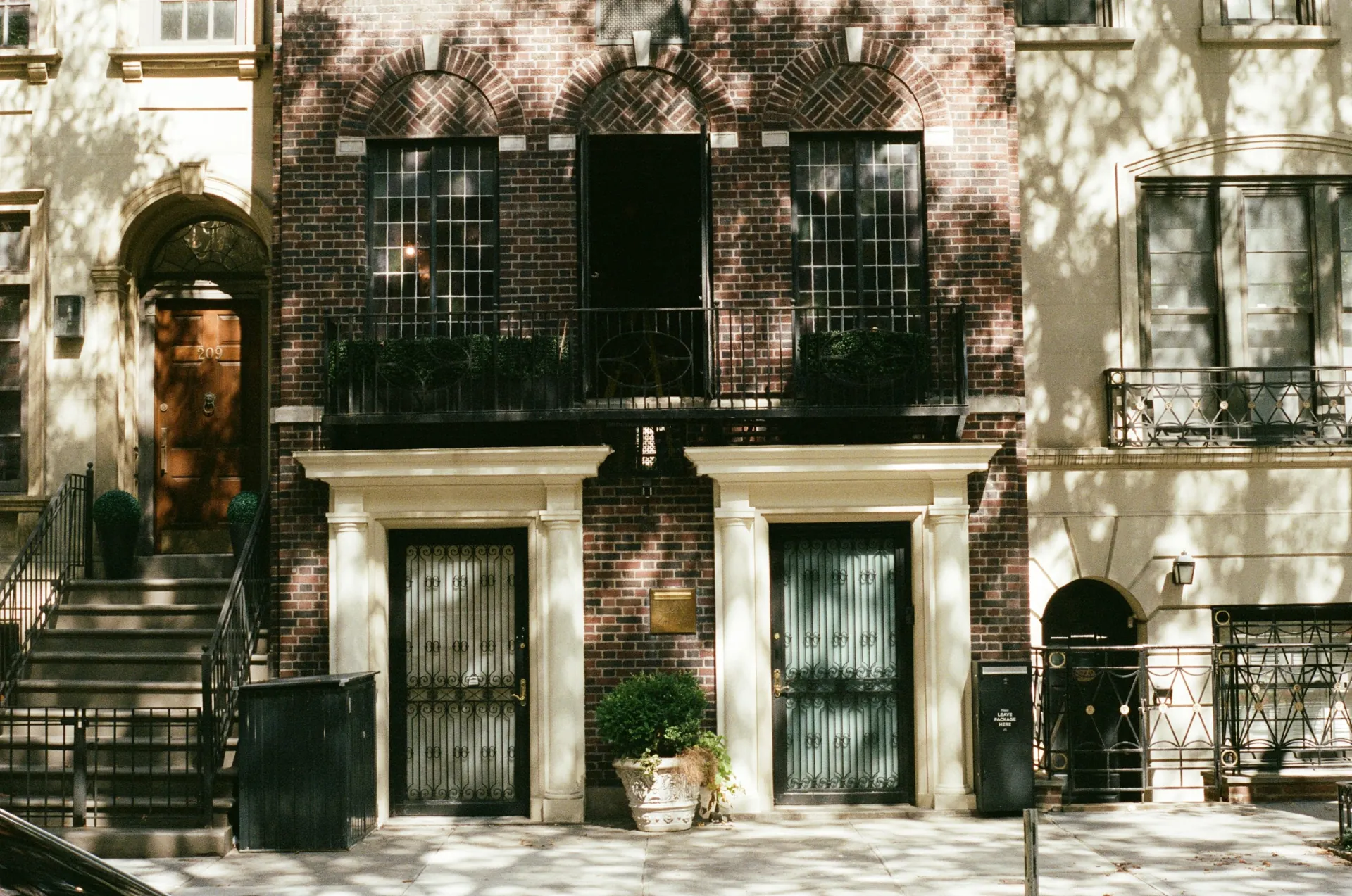
Residential entrances in Manhattan. Illustrative stock photograph.
Photo: Bradley Andrews · Unsplash license
Need a Locksmith in NYC?
Use the LockAtlas app to describe the work, review the price breakdown and check your booking details.
Download the App