Can I put a deadbolt on my apartment door? A NYC metal-door guide
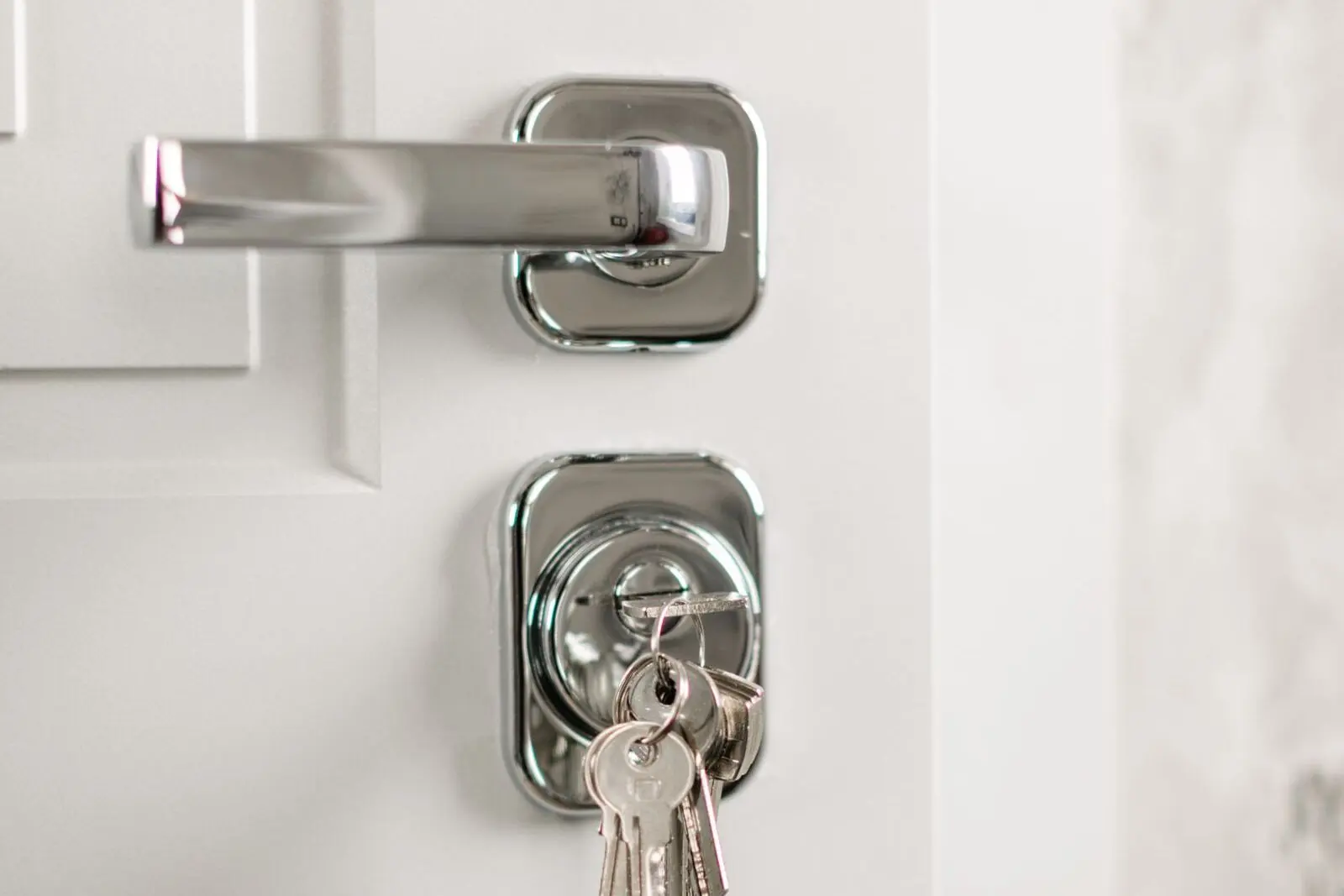
You want a second lock on your apartment door, and the door is a heavy steel slab that swings shut on its own closer. That is the normal New York City setup, and it changes the job more than most people expect.
The short answer: in most NYC rental buildings with three or more apartments, state law lets you add your own lock to your apartment's entrance door, as long as the landlord gets a duplicate key when they ask. On a metal door, the bigger questions are practical and about fire safety. Ask the building whether the door is fire-rated before anyone drills, keep a thumbturn on the inside, and leave the closer alone.
Your right to add a lock, briefly
Multiple Dwelling Law § 51-c lets a tenant install a lock in the entrance door of their own unit, "separate and apart from any lock installed and maintained by the owner," no more than three inches in circumference. The condition is that a duplicate key "shall be supplied to the landlord or his agent upon his request." A lease clause charging extra rent or a fee for that right is void.
The section covers a multiple dwelling, which the same law defines as a home for "three or more families living independently of each other." It excludes housing supervised by a municipal housing authority, such as NYCHA, along with hotels, motels and school or college dormitories. It is about adding your own lock, not replacing the owner's. Our piece on a roommate or ex who still has a key walks through the full rule and where it stops, including why everyone who lives in the apartment keeps a key.
In a co-op or condo, check the proprietary lease or bylaws and the house rules, and ask the managing agent before scheduling, including whether the building requires a particular lock or installer. Our guide to co-op lock change rules lists what to ask. If you are adding a lock because you feel unsafe right now, call 911 first. A lock is not an emergency tool.
Fire-rated doors: read the label before anyone drills
Many NYC apartment entrance doors and frames are fire-rated, meaning the assembly was built and tested to hold back fire for a set time. You can't tell from the face of the door. The evidence is a label.
The NYC Building Code says fire door assemblies "shall be labeled by an approved agency" and that the labels "shall be permanently affixed to the door or frame." The label shows the manufacturer, the third-party inspection agency and the fire protection rating. On a steel door it is usually a small plate or embossed tag on the hinge edge, with a separate label on the hinge side of the frame. In older buildings, both are often painted over.
Rated doors come with a maintenance rule. The NYC Fire Code says fire doors "shall be maintained in good working order in accordance with NFPA 80," the national fire door standard, and that "fire door assemblies shall not be modified." Whether a particular deadbolt installation is acceptable on a particular rated door depends on that door's listing and on the hardware.
So before booking, ask the building three things: is the door fire-rated, what lock hardware is allowed on it, and does the building require its own installer. If no one knows and the label can't be read, treat that as a question for management, not a green light.
The self-closer stays, and the door must still latch
Local Law 111 of 2018 added Administrative Code § 28-315.10, which, as amended in 2022, says doors providing access to interior corridors or stairs in residential occupancy groups R-1 and R-2 "shall be equipped with a device that will ensure the door, when opened and released, returns to the closed position and self-latches shut," with a compliance date of July 31, 2021.
HPD, the city's housing agency, puts it plainly on its self-closing doors page: "Apartment doors and hallway doors are required by law to swing closed and latch by themselves after being opened." HPD's inspection rule gives the reason: so that "smoke will not spread to hallways and other apartments due to a door that is left open and does not self-close." Keeping those doors in good repair is the owner's duty.
A deadbolt you throw by hand changes none of that, as long as it is installed well. The latch still has to catch on its own every time the door swings shut. If a new strike, a misaligned bolt or a bulky lock body makes the door bounce, drag or stop short, the job isn't finished. HPD tells tenants not to tamper with self-closing doors, including "taping the latch" or "overriding the closing device." If your closer is already weak, tell the owner rather than working around it. HPD also points tenants to 311 for fire safety complaints.
Inside, a thumbturn, never a key
The Building Code's means-of-egress chapter sets the general rule: exit doors "shall be readily openable from the egress side without the use of a key or special knowledge or effort." For apartment doors, it allows "a night latch, dead bolt or security chain, provided such devices are openable from the inside without the use of a key or tool." Its security section for apartment buildings describes the entrance-door deadbolt as "operable by a key from the outside and a thumb-turn from the inside."
That rules out a double-cylinder deadbolt, which needs a key on both sides, on an apartment entrance door. It also rules out a padlock and hasp on the inside, or any lock that needs a code or a trick to open from inside. In a fire, the person trying to get out may be a guest, a child or someone half awake in smoke.
Two or more locks on the door are fine. The code says unlatching a door "shall not require more than one operation," then makes an exception for apartment doors fitted with the deadbolts, latches and chains it permits. What matters is that each lock opens from inside by hand.
How a deadbolt goes into a hollow metal door
A typical NYC apartment door is hollow metal: two thin steel skins over a core, hung in a steel frame that in many buildings is filled with mortar or grout. That is why this isn't the wood-door job in hardware-store videos.
Screws don't hold in thin steel. Hardware on a hollow metal door is normally fastened with through-bolts that clamp both faces, or into reinforcement inside the door. A kit meant for a wood door, with short wood screws, will work loose.
The existing prep decides a lot. Many metal doors leave the factory cut and reinforced for a specific lock: a mortise pocket, a cylindrical bore or a rim cylinder hole. Reusing a prep, or fitting a rim deadlock that mounts on the inside face and needs only one cylinder hole through the door, is a very different job from cutting a new bore and edge hole through steel. On a rated door, which route is acceptable goes back to the building and the label.
Thickness and backset have to match. Deadbolts are made for a range of door thicknesses and a set backset, the distance from the door's edge to the center of the cylinder. An existing lock, an edge reinforcement or a mortise pocket may leave less room than the box assumes. A locksmith measures first so the new lock clears the existing hardware and the bolt reaches the frame.
The frame is half the lock. In a steel frame, a bored deadbolt needs a cutout and a strike in the frame itself, while a rim deadlock's strike mounts on the frame's inside face. Either way, it has to line up so the bolt throws fully without forcing. The 3-inch-screw advice in our strike plate and frame reinforcement guide is written for wood jambs, so expect a different method on steel. If you are still choosing hardware, deadbolt grades explained covers what the ratings mean, and our piece on whether two apartment locks can share a key covers keying the new lock to your existing one.
Before booking, gather photos of the door edge, the inside face, the existing locks and the frame, plus the label if you can find it, and the building's answer on approval. The estimate depends on the lock, the door's material and existing preps, whether a new bore or frame cutout is needed, and whether you supply the hardware. Where the door already has a deadbolt prep and the job is a straight swap, our NYC locksmith cost guide lists typical market ranges of $80 to $180 per cylinder for a standard lock change and $250 to $600 per lock installed for high-security hardware. Once you have the building's answer and the photos, our lock installation service in NYC lets you describe the door and the lock you want, check availability and review the estimate in the app before confirming.
FAQ
Can I put a deadbolt on my apartment door?
In most NYC rentals in buildings with three or more apartments, yes. Multiple Dwelling Law § 51-c lets you add your own lock to your unit's entrance door, provided the landlord gets a duplicate key on request. It does not cover NYCHA apartments, hotels or dorms, and co-ops and condos have their own rules.
Can you put a deadbolt on a fire rated door?
Sometimes, but not as a freelance job. The NYC Fire Code requires fire doors to be maintained under NFPA 80 and says the assemblies "shall not be modified," so whether a given lock and installation is acceptable depends on the door's label and listing. Ask the building first, and expect the door to keep closing and latching on its own afterward.
Do I have to give my landlord a key to a lock I add?
If they ask, yes. Section 51-c makes supplying a duplicate key to the landlord or their agent on request the condition of the right.
Is a double-cylinder deadbolt allowed on a NYC apartment door?
The Building Code describes the apartment entrance deadbolt as key outside, thumbturn inside, and permits deadbolts on apartment doors provided they open from inside without a key or tool. A lock that needs a key to get out fails that test.
Can I install a deadbolt on a hollow metal door myself?
It takes metal-cutting tools, through-bolts and a frame cutout or surface strike, and mistakes in steel are hard to undo. On a rated door, the building's approval comes before any tool.
Where LockAtlas fits
Once the building has said yes, describe the door, the label if there is one and the lock you want, check availability and review the estimate in the app before confirming. The technician is verified before they can take the job, and if the technician finds something different at the door, the revised price comes back to you for approval before that work starts.

Need a Locksmith in NYC?
Use the LockAtlas app to describe the work, review the price breakdown and check your booking details.
Download the App