Can your NYC apartment’s two locks use the same key?
Sometimes. Two apartment locks can use the same key when their cylinders support a compatible key system and can be configured together. The brand names alone do not establish that. A locksmith needs to identify both cylinders, check the keyways and confirm any restrictions before promising a one-key result. You may be able to keep both lock bodies, but replacement cylinders or different hardware may be needed.
For two locks you want to operate with one everyday key, ask about having them keyed alike, the arrangement described in Schlage’s guide to keyed-alike door locks. Calling that key a “master key” can describe a different job, as the comparison below explains. Being specific helps you get the right assessment and quote.
Start with the access arrangement you actually want
Suppose your apartment door has an upper auxiliary lock and a lower lock integrated with the handle. You currently use a separate key for each. If everyone authorized to open one should also open the other, keyed-alike operation may suit your goal. You still have two physical locks; you carry one key pattern for them.
The main terms describe different arrangements:
| Request | Meaning | Example of the intended result |
|---|---|---|
| Keyed alike | The locks in the set operate with the same key | Your everyday apartment key works in both door locks |
| Keyed different | Each lock has its own operating key | You keep separate keys for the upper and lower locks |
| Master keyed | Individual keys have limited access, while a master key operates a defined group | A building manages different apartment keys and a separately authorized higher-access key |
These distinctions follow Master Lock’s keying terminology. Its examples use padlocks, but the terms distinguish the access arrangements you are asking a door-lock provider to assess. They do not establish that any particular apartment hardware supports them.
A duplicate key is another matter. Copying a key produces an extra credential for the existing arrangement; it does not make an incompatible second lock accept that key. When requesting service, explain whether you want fewer different keys, replacement credentials after a loss, or both.
Compatibility lives in the cylinder, not the logo
The cylinder is the part that accepts the key and operates the lock. The keyway is the shaped opening and matching key profile. Even when a key profile is compatible, the cylinders must also support the required configuration. Do not force one key into another lock as a home compatibility test.
Kwikset provides a useful counterexample to the same-brand assumption. Its SmartKey support distinguishes KW1 and SC1 versions: an SC1 SmartKey cylinder does not accept KW1 keys. It also says the SC1 version accepts five-pin SC1 keys, not six-pin SC4 keys. That is a product-specific limitation within one manufacturer’s range. See Kwikset’s rekey compatibility answers.
The physical cylinder also has to fit and operate the particular lock. A key-compatible cylinder chosen for one housing is not automatically the right part for another. Schlage’s conventional cylinder specifications illustrate this: its modular system uses application-specific housings, cams and tailpieces for different lock formats. The installer needs to identify the correct supported parts, not simply match the visible key slot.
Ask the provider to assess these points together:
- The manufacturer, model and cylinder format of each lock.
- The exact keyway and key system currently in each cylinder.
- Whether both can be configured for the same authorized operating key.
- Whether a compatible replacement cylinder is available for either lock.
- The condition and operation of the lock bodies that would remain.
That assessment may produce a straightforward rekeying job, a cylinder change in one lock, or a recommendation to retain separate keys. Our guide to rekeying versus replacing a lock explains the broader choice. No brand-level rule can settle it for a pair of unidentified locks.
Decide who should receive access to both locks
One-key convenience changes what a copied or borrowed key can operate. If a person receives the shared key, they can operate both locks in that keyed-alike set. Consider that before combining a lock you use for everyday entry with one you deliberately keep under separate control.
A lost shared key also affects both cylinders. Plan how you would report the loss and arrange authorized changes. If you are already changing keys because one went missing, tell the locksmith that both convenience and retirement of the old credential are requirements. Simply matching the other lock to the lost key’s pattern would not meet that second goal.
Keep your apartment project separate from shared building entrances. Having a lobby key does not establish permission to alter the building’s key system or request a higher-access key. Ask management who administers any building-controlled cylinder and what approvals apply to your proposed apartment work.
Restricted key systems may have specific authorization procedures. For example, Medeco describes authorization cards for certain restricted carded programs, with duplicate-key requests tied to the authorized cardholder. That is a program-specific requirement, not a rule for every Medeco key. See Medeco’s explanation of authorization cards and our NYC tenant guide to restricted keyways.
If a building-managed system must remain, ask whether the proposed work preserves it. Do not request a private change that quietly removes required access arrangements. Obtain the responsible owner or manager’s instructions before the locksmith orders restricted parts or changes a managed cylinder.
Request a quote for two identified locks
Prepare photographs of the front, inside controls and accessible door edge. Include readable manufacturer markings, while keeping the apartment number and key cuts out of general messages. If the provider needs to inspect a key, agree on a private, appropriate way to do that. Avoid putting detailed key images into public forums.
State whether both locks currently work smoothly, whether you possess their working keys and whether any key has been lost. Mention a restricted-key card or building key arrangement without sending its identification details unsolicited. Explain whether you have permission to change both locks.
You can use this short request:
I want the two locks on my apartment door assessed for keyed-alike operation. I [have / do not have] the current working keys. My goal is [fewer keys / new credentials after a loss / both]. Please identify the cylinders and keyways, explain which parts can stay, and quote the assessment, labor, parts and included keys before any change.
Ask the provider to name the proposed replacement parts if any are needed. A quote for “rekey two locks” is incomplete if the job actually requires a new cylinder or lock body. Clarify the attendance charge, the number of keys supplied and whether an unsuccessful compatibility assessment still carries a fee.
Verify the attending technician’s identity and credentials, and approve the written scope before work begins. If inspection changes the proposal, ask what was discovered and review the revised total. You should be able to distinguish a compatibility requirement from an optional hardware upgrade.
Check the result before the visit ends
Have the locksmith demonstrate both locks using the agreed key and the normal inside controls. Check that the door closes, latches and opens from inside as intended. Do not accept a one-key result that leaves the door binding or changes exit operation without a proper assessment.
If old credentials were meant to stop working, ask the technician to verify and document that outcome for both locks. Identify any deliberately retained building access arrangement separately. Make sure every supplied new key operates as intended before distributing copies to the household.
Keep the invoice, cylinder or hardware model details, and the process for obtaining authorized future copies. Store any restricted-system authorization document securely. Record who received each key without attaching your address to the key itself.
For a recent move, use the NYC apartment move-in lock checklist to review other access points and inherited credentials. Combining two keys addresses only the locks included in the work order.
FAQ
Can two locks from different brands use one key?
Sometimes, if their specific cylinders and key systems are compatible or suitable replacement cylinders are available. Different brands do not rule it out, and matching brands do not guarantee it. Ask for the exact parts and keyway assessment.
Will I need to replace both locks?
Not necessarily. Serviceable lock bodies may remain while compatible cylinders are rekeyed or replaced. If the provider proposes full replacement, ask which condition or compatibility limit makes a cylinder-only solution unsuitable.
Is one key for two locks a master key?
Usually, the household request is for locks keyed alike. A master-keyed system supports a defined hierarchy of access. Tell the locksmith who needs to operate which locks so the proposed arrangement matches your needs.
Will my old keys stop working?
Only if retiring those credentials is included and accomplished in the agreed work. Matching a second lock to an existing key intentionally keeps that key useful. If a lost or inherited key must stop working, make that requirement explicit for every affected lock.
To assess your pair of locks, start an inquiry through our rekeying service for NYC apartment locks and request a written compatibility assessment and scope before authorizing the change.
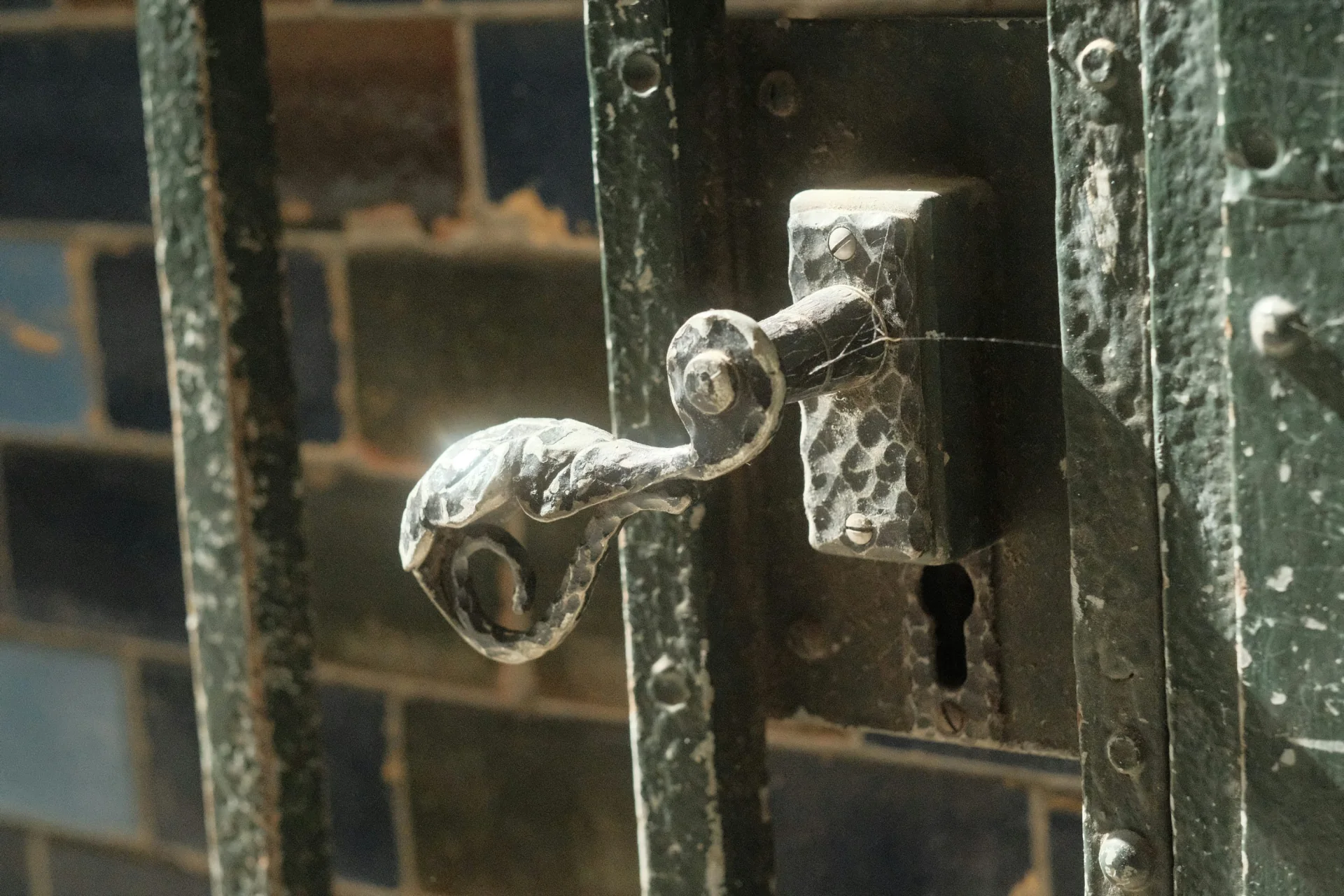
Whether two locks can share a key depends on their cylinders and key systems. Illustrative stock photograph.
Photo: Konrad Hofmann · Unsplash license

Need a Locksmith in NYC?
Use the LockAtlas app to describe the work, review the price breakdown and check your booking details.
Download the App