Restricted keyways: setting up key control as a NYC tenant

A restricted keyway is a lock cylinder whose key blanks are not sold to the general public. Only authorized dealers can cut duplicate keys, and only with documentation. For NYC tenants, this is the structural answer to a recurring problem: keys that should not exist but do, in the hands of former roommates, building staff, contractors, and ex-partners.
This piece explains what restricted keyways actually are, which residential systems offer them, how to set up key control as a NYC tenant, and the practical limits of the system.
What a restricted keyway is
Most residential locks use a standard keyway. Anyone with a $2 key blank and a hardware-store key-cutting machine can duplicate the key. The standard Kwikset, Schlage, and unbranded keyways are all in this category. The key control is effectively zero: the key in your hand can be copied at any hardware store, and you have no way to know how many copies exist.
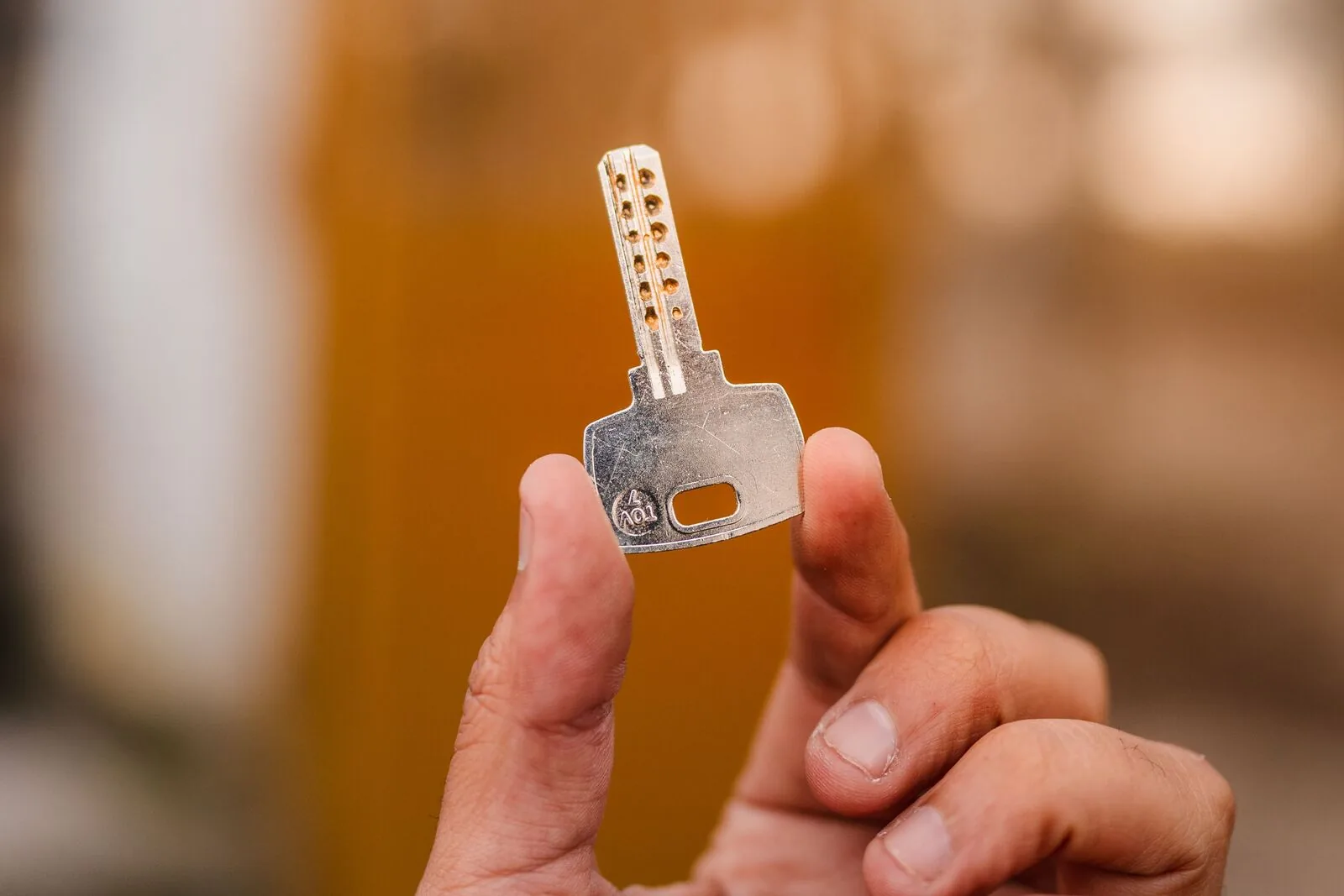
A restricted keyway uses a proprietary key blank that is not sold to the public. The blank is held by authorized dealers (typically high-security locksmiths). To cut a duplicate, you must:
- Visit an authorized dealer
- Present identification
- Sometimes present documentation of authority to duplicate (proof of address, signature on file, etc.)
- Pay for the duplicate (typically $15 to $40 per copy, vs $3 to $8 for standard keys)
The dealer logs each duplicate in their records. The lock manufacturer typically requires dealers to maintain these records for audit purposes.
The result: the number of keys to your lock is knowable and traceable. You authorize each duplicate. Unauthorized duplicates are prevented by the supply-chain restriction on the key blank.
Which residential systems offer restricted keyways
Three major brands cover most NYC residential restricted keyway needs.
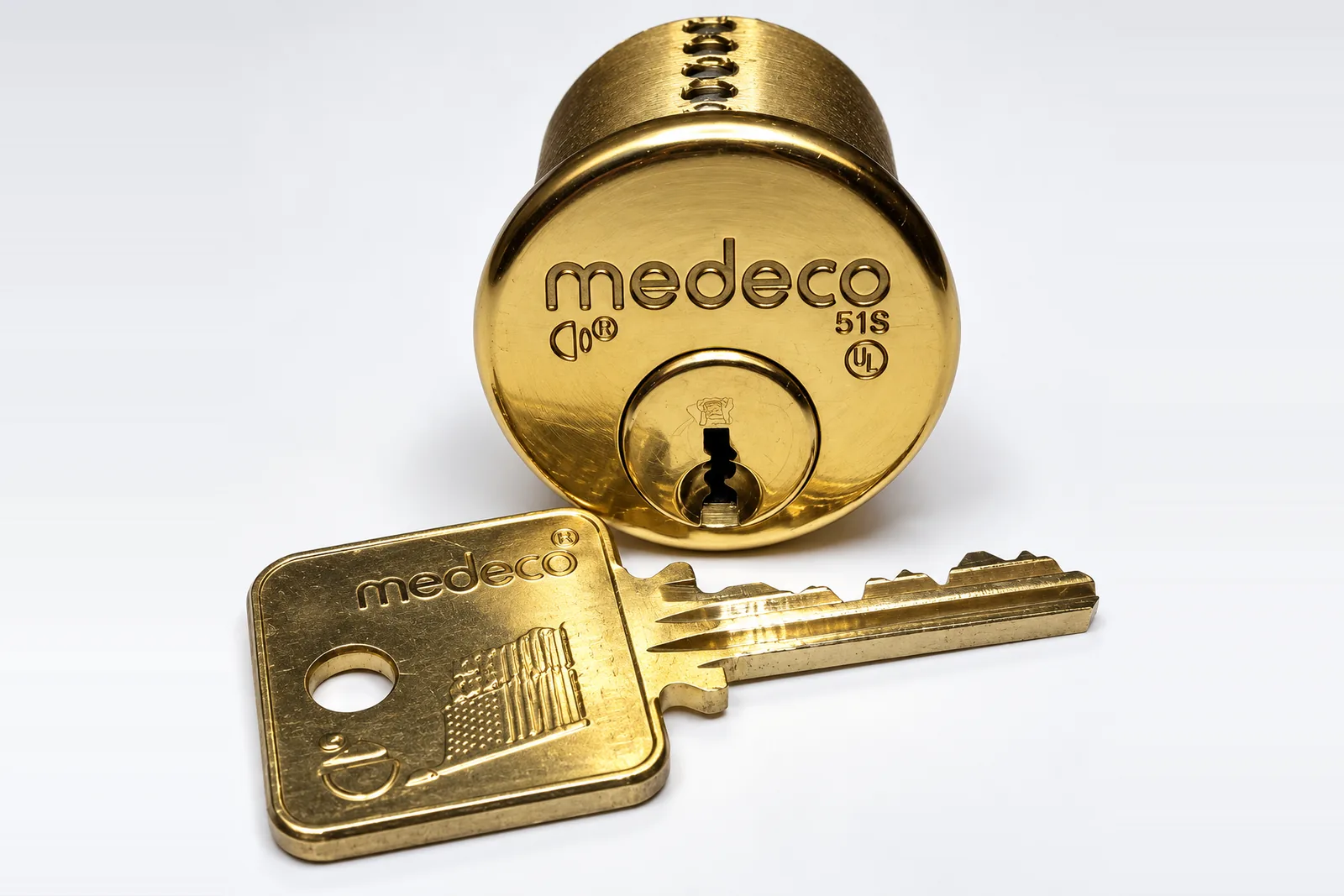
Medeco High Security. Medeco offers restricted keyways across their high-security product line. The Medeco M3 and Medeco Maxum platforms use angled-pin designs that combine high-security mechanical features with restricted keyway control. Each Medeco lock comes with a "key control card", the customer's signature on this card is required for future duplicates.
Mul-T-Lock High Security. Mul-T-Lock's MT5+ platform uses telescoping pins and a restricted keyway. The dealer network is somewhat smaller than Medeco in the US but comparable in NYC.
Schlage Primus. Schlage's high-security line uses a sidebar mechanism and restricted keyway. The dealer network is larger because Schlage has wider US presence than the high-security-only brands.
All three are UL 437 certified (resistant to pick, drill, and bump). All three are Grade 1 by ANSI/BHMA. The restricted keyway is one feature within a broader high-security architecture. Full lock comparison: Medeco vs Mul-T-Lock vs Schlage.
How to set up key control as a NYC tenant
Five-step setup for a typical NYC apartment.
Step 1: Choose the system based on building requirements. If your building has a master key system or restricted keyway brand requirement (common in co-ops and luxury rentals), use whatever the building uses. If no building requirement, Medeco is the typical NYC residential default. Check with your building before purchasing.
Step 2: Purchase from an authorized dealer in NYC. Don't buy on Amazon or eBay. Authorized dealers handle the warranty, the key control registration, and the future duplicate path. NYC has several dozen authorized Medeco and Mul-T-Lock dealers. Search the manufacturer's dealer locator.
Step 3: Install with a DCWP-licensed locksmith. The installation includes the cylinder, the strike plate upgrade, and the key control registration. Cost for a one-cylinder Medeco installation in NYC: $250 to $500. The mechanism is described in the 2026 NYC locksmith cost guide.
Step 4: Register the key control card. The dealer enters your information into the manufacturer's key control system. Your signature, contact information, and key identifiers are recorded. Future duplicates require matching authentication.
Step 5: Document your authorized key holders. Make a list of who has each key. Include the key's unique serial number (etched into the key body), the holder's name, and the date the key was issued. Update the list whenever a key changes hands.
The setup is a one-time investment of about 2 hours of time and $250-500 of cost. The ongoing benefit is permanent key control.
What you control vs what you don't
Three things you control with a restricted keyway:
Who has keys. Each key is documented. Lost keys can be tracked back to a specific holder.
When new keys are made. Each duplicate requires your authorization. The dealer will not cut a duplicate without it.
Re-keying after a key holder change. If a roommate moves out, you can re-key to a new pin configuration. The old keys are now obsolete. Cost: $40 to $80 per cylinder for re-keying.
Three things you don't control:
Pre-existing keys before your installation. If a previous tenant or contractor had a key to the original lock, those keys still exist. The restricted keyway only controls keys from the moment of your installation forward. This is why move-in lock changes matter; see moving into a NYC apartment: the 7-day lock checklist.
Building master keys. If your building maintains a master key system, the building staff has keys that work on your apartment. This is contractually agreed and not changeable through your apartment lock. Discussion in co-op board rules on lock changes.
Key control by others holding your key. A key you authorize someone to have can still be lost, stolen, or shared without your knowledge. The restricted keyway prevents duplication; it does not prevent transfer or loss.
The key control system reduces the number of keys to a manageable, known set. It does not make keys inaccessible to all parties.
Setting up specific scenarios
Three common scenarios for NYC tenants.
Couple sharing an apartment. Two keys (one each), one stored backup with a trusted neighbor or family member. Total: 3 keys, documented to 3 specific people. Re-keying happens if the relationship ends.
Roommate situation with 2-3 people. Each roommate has one key. One additional key documented to the primary tenant for emergencies. Re-keying happens when any roommate moves out.
Sublet or short-term rental scenario. The primary tenant retains all keys. Sublets and short-term guests are given a temporary key (often a smart lock or retrofit adapter, not a physical key duplicate) that is invalidated when the rental period ends. See smart locks in NYC rentals: what your landlord can refuse for the smart lock path.
In all three, the operational discipline is to log who has each key and update the log when anything changes.
Real cost analysis over 5 years
For a NYC tenant in a typical apartment over 5 years:
Without restricted keyway (Grade 3 standard):
- Initial installation cost: $0 (uses existing lock)
- Move-in rekey: $90 to $150
- Three additional re-key events over 5 years (roommates, lost keys, etc.): $270 to $450
- Replacement when worn: $100 to $200
- Total 5-year cost: $460 to $800. Unknown number of keys exist throughout this period.
With Medeco restricted keyway:
- Initial installation cost: $250 to $500
- Move-in already covered (new install replaces existing)
- Three re-key events over 5 years (faster and cheaper due to existing system): $200 to $400
- Replacement: not needed (Grade 1 lasts decades)
- Total 5-year cost: $450 to $900. Known number of keys, all documented, with traceable accountability.
The cost is comparable. The benefit is fundamentally different: instead of "I think these are all the keys," you have a documented list.
What changes for the next time you upgrade
A platform-based locksmith service makes the upgrade path cleaner. The lock photo at booking identifies your current cylinder. The pricing model includes the Grade 1 cylinder with restricted keyway and proper installation. The technician is verified to work with restricted keyway systems.
LockAtlas handles this on the platform. The mechanism is on the LockAtlas download page.
FAQ
Can I get the keyway "restricted" without changing the lock?
No. The restriction is built into the cylinder. Changing the keyway requires changing the cylinder. This is one of the reasons restricted keyways are usually paired with a full lock upgrade (Grade 1, high-security cylinder).
What if my building requires a specific keyway?
That's the controlling decision. If the building requires Medeco for master key compatibility, you install Medeco. If the building requires a specific Mul-T-Lock for the integrated system, that's what you use. The brand is set by the building; you can still control the dealer relationship for your specific keys.
How do I prove the keys I authorize are duplicate-resistant?
Show the key control card or signature-on-file documentation. The dealer can also provide a written attestation that your account is registered. For ongoing operations, the periodic audit of issued keys against your records is the verification.
What if my landlord wants a key?
Multiple Dwelling Law § 51-c covers a separate tenant lock on an eligible apartment entrance, apart from the owner's lock, with a limit of three inches in circumference and a duplicate key supplied on request. It excludes municipal housing authority units, hotels, motels, and school or college dormitories. It does not give blanket permission to replace or rekey the owner's lock, modify shared doors, or install any chosen device. Check the proposed work against your lease and applicable building requirements before scheduling.
Are restricted keyways worth it for a 1-year rental?
The math is closer. The upfront cost is similar to or higher than the cumulative cost of standard re-keying over a single year. For 2+ year tenures, the math typically favors the upgrade. For 1-year tenures, the calculation depends on whether you have a strong reason to control keys precisely.
The restricted keyway is the structural answer to NYC's lateral key-circulation problem. The setup is straightforward, the cost is comparable to standard locking over time, and the benefit is permanent key accountability. Full lock-comparison framework: Medeco vs Mul-T-Lock vs Schlage. Move-in security context: moving into a NYC apartment: the 7-day lock checklist. Co-op-specific considerations: co-op board rules on lock changes.
LockAtlas is live now on the App Store and Google Play, serving all five boroughs of NYC. Questions or partnerships: support@lockatlas.com
Customer app (book a verified NYC locksmith)
- iOS: LockAtlas on the App Store
- Android: LockAtlas on Google Play
Technician app (apply to receive jobs)
Need a Locksmith in NYC?
Use the LockAtlas app to describe the work, review the price breakdown and check your booking details.
Download the App