Locking a fire exit door in NYC: panic bar rules
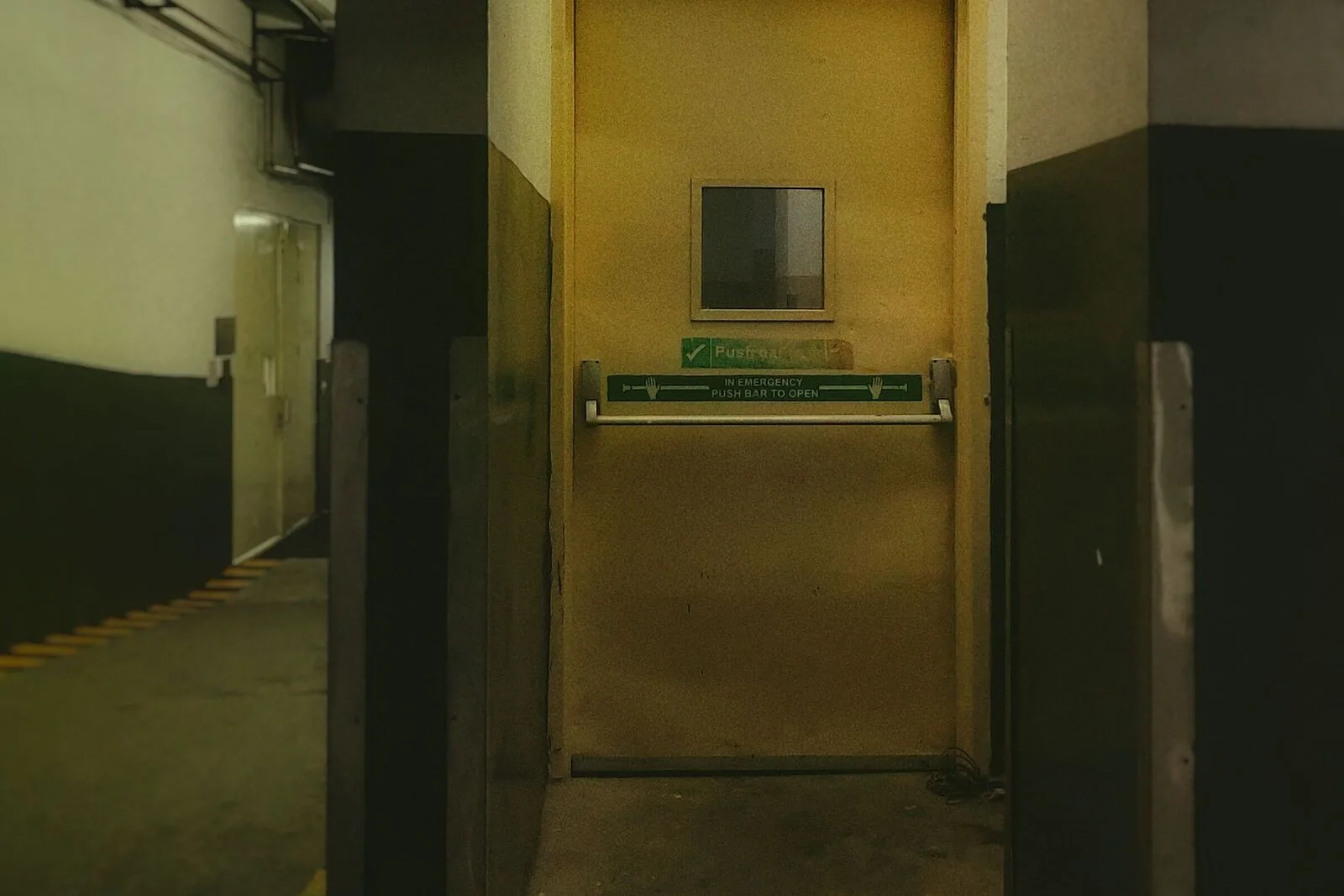
Closing time at a restaurant on Atlantic Avenue in Brooklyn, and the manager is afraid to go home. A delivery cart hit the rear exit earlier, the panic bar no longer latches, and the door swings open from the alley side. There is a chain in the basement. It is exactly the fix the code rules out.
The short version: you can lock a fire exit door against people coming in, never against people getting out. New York City's Building Code requires exit doors to open from the inside "without the use of a key or special knowledge or effort," and the Fire Code makes it unlawful to obstruct or impede a required exit. Hardware that locks only from the outside is how you secure one legally; a chain, a padlock, a slide bolt or a keyed lock on the inside is not.
Can you lock a fire exit door in NYC?
Yes, from the outside. The rule in the 2022 NYC Building Code is one sentence: "egress doors shall be readily openable from the egress side without the use of a key or special knowledge or effort" (§ 1010.1.9). The egress side is the side people leave from.
Opening the door also has to take one motion: "The unlatching of any door or leaf shall not require more than one operation" (§ 1010.1.9.5). So a panic bar plus a deadbolt fails, even if the deadbolt has a thumbturn. And "manually operated flush bolts or surface bolts are not permitted" (§ 1010.1.9.4), apart from narrow exceptions for the inactive leaf of some double doors.
The federal OSHA exit-route standard says the same for workplaces, and spells out the answer: "A device such as a panic bar that locks only from the outside is permitted on exit discharge doors."
The front entrance can work differently. A roll-down security gate over a shop's main entrance follows its own section of the code, which we cover in NYC's roll-down gate law.
What never goes on an exit door
Each of these stops the door opening with one push from inside, which is what the code forbids:
- A chain through the push bar or the handles, with or without a padlock.
- A hasp and padlock, or a slide or barrel bolt.
- A deadbolt that needs a key from the inside.
- A bar, board or brace across the door.
- Wedges, zip ties, or screws driven through the door into the frame.
- Stock, trash or furniture stacked against it. The 2022 NYC Fire Code says "it shall be unlawful to obstruct or impede access to any required means of egress" (§ 1027.2), and an exit may not be used for storage (§ 1027.3).
There is no closing-time exception written into the rule. Fire Code § 1027.3 requires every required exit to be "continuously maintained free from obstructions and impediments to immediate use in the event of fire or other emergency." A chain put on at closing is still on when the cleaner comes in or the first cook opens up.
For an employer, a locked exit is also its own offense. Administrative Code § 28-307.1 makes it "unlawful for an employer or the agent of an employer to lock the doors of a workplace or otherwise obstruct or prohibit exit from a workplace" when that may endanger anyone working there in a fire or other hazardous event. It is classified as an immediately hazardous violation, and a conviction or finding of liability adds a fine or civil penalty of $5,000 to $20,000 for each person endangered, under the Administrative Code's workplace exits article.
A tenant cannot leave it to the landlord either: under Fire Code § 107.5, an occupant who "creates, or allows to be created" a hazardous condition "shall also be responsible" for fixing it.
Panic bar requirements in NYC
Under Building Code § 1010.1.10, doors serving certain spaces "shall not be provided with a latch or lock other than panic hardware or fire exit hardware." The list covers Group H spaces, Group A or E rooms holding 75 or more people, and assembly spaces under 75 that the code classifies as Group B. A restaurant or bar is an assembly use (§ 303.3). Below 75 people the code files it under Group B (§ 303.1.2), and § 1010.1.10 names that case too. In practice, under the 2022 code, a latch on a restaurant's exit door means panic or fire exit hardware, whatever the head count. The exceptions are narrow: a main exit of a Group A assembly space may be lockable only with the Buildings Commissioner's approval and an electrical release that opens it remotely in an emergency (§ 1010.1.9.3, item 2), and Group A or E doors may use an electromagnetic lock that meets § 1010.1.9.9. An older space follows its approved plans.
When a panic bar is installed or replaced, § 1010.1.10.3 sets the standard:
- Panic hardware listed to UL 305. Fire exit hardware, the version for fire-rated doors, listed to UL 10C and UL 305.
- A push bar that extends across at least half the width of the door.
- An unlatching force of no more than 15 pounds.
Electronic locking is possible, with conditions. An electromagnetic lock needs hardware on the door that cuts its power and unlocks it immediately with one hand, has to unlock when power fails, and has to release when a required panic bar is pushed (§ 1010.1.9.9). A delayed-egress lock, which sounds an alarm and releases after a short delay, needs special review and approval by the Buildings Commissioner and is not permitted in Group A, E, F or H spaces at all (§ 1010.1.9.7). An alarmed exit device is a different product: the bar opens the door at once, and the alarm only announces that someone used it. Fire Code § 1027.3.2 covers the rest: "Security devices affecting means of egress shall be subject to the approval of the Commissioner of Buildings in consultation with the department." Before changing what is on an exit door, check the approved plans or Certificate of Occupancy for the space, and put the question to FDNY or a design professional when the answer is not clear.
What an FDNY inspection looks for at an exit
The Fire Commissioner's staff may inspect any building "at all reasonable times" to check compliance (Fire Code § 104.3), and the Administrative Code requires the Fire Department to make at least 50 unannounced workplace inspections a year looking for locked exits (§ 28-307.2). The FDNY's Restaurant Fire Safety Guide in its place-of-assembly section lists "Egress blocked or locked" among the most common reasons restaurants fail an annual inspection, next to "Obstruction in travel path" and "Missing or damaged lighting or exit signs."
At an exit door, the code and the guide point to the same short list:
- Unlocked and unblocked. The guide's pre-event check reads: "All exits are unblocked, unlocked, and properly marked."
- Working hardware. "Door hardware and other devices and physical components of the means of egress shall be maintained in good working order at all times" (Fire Code § 1027.3.1). A bar that will not latch, or will not release, fails this.
- Clear outside. Exits must be kept free of snow and ice (§ 1027.3.3), outside steps included.
- Signs and lights. A door that looks like an exit but is not needs a "Not An Exit" sign (§ 1027.8), and emergency lighting is tested at least once a month unless it self-tests (§ 1027.9.1).
When the panic bar will not latch
A bar that will not latch still lets people out, so nobody is trapped; the risk is someone getting in. Treat it as a same-day repair, and do not patch it with anything from the list above.
After an impact, the usual causes are mechanical:
- The strike on the frame is knocked out of line or bent, so the latch bolt misses it.
- The latch bolt or the bar's mechanism is damaged, or the bar is bent and binds.
- On a pair of doors, a vertical rod is bent and the top or bottom latch no longer reaches its strike.
- The closer no longer pulls the door fully shut.
Most of that is a repair, not a replacement: realigning or replacing the strike, adjusting the closer, replacing a latch or rod. A bent device gets replaced, and any fire exit door lock replacement has to meet the listing, width and 15-pound rules above; on a fire-rated door, which usually carries a label on the hinge edge or the frame, that means fire exit hardware. The same alignment checks we describe for commercial door locks in NYC apply to an exit door: rule out the frame, hinges and closer before paying for a new device.
When you request the repair, send photos of the whole door from inside, the latch and the strike, and say whether it is a single or double door and whether it has a key cylinder or alarm. If it is the front door that fails at closing instead, start with our storefront door guide. Our commercial locksmith service in NYC covers panic bar and exit device repair.
FAQ
Is it illegal to lock a fire exit in NYC?
Locking it so it cannot be opened from inside is: Fire Code § 1027.2 makes obstructing a required exit unlawful, and for employers § 28-307.1 adds $5,000 to $20,000 per person endangered. Locking it against entry from outside is allowed.
Can you put a lock on a fire exit door?
On the outside, yes: exit hardware with locked outside trim, or no outside trim at all. On the inside, nothing that needs a key, a tool or a second step.
Can I chain the back door after we close?
No. Fire Code § 1027.3 requires exits to be kept clear "continuously," and anyone still inside, such as a cleaner or a manager doing the books, is protected by Administrative Code § 28-307.1. With the last person out, the exit device's latch and its locked (or absent) outside trim are what secure the door; nothing is added on the inside.
Does a NYC restaurant need a panic bar on the back door?
Under the 2022 Building Code, a latch or lock on a door serving a restaurant or bar of any size has to be panic or fire exit hardware, with narrow exceptions. An older space follows its approved plans.
Can a locksmith fix a panic bar that won't latch?
Usually, by realigning the strike, adjusting the closer or replacing a latch or rod. A bent device is replaced with listed exit hardware.
Where LockAtlas fits
Panic bar and exit device assessment, repair or installation is among the commercial requests listed on our commercial locksmith page, and LockAtlas serves all five boroughs. In the app you describe the door and add photos. The price you see before booking is a service fee that varies by time of day and day of the week, a flat labor price for the job (not hourly), parts if needed, and 8.875% NY sales tax. If the technician finds more than the photos showed, such as a bent device that has to be replaced, that becomes a proposed change you approve or decline in the app, and the price can change only if you approve it. Locksmith licensing in NYC is individual, and DCWP keeps licensing individual locksmiths until May 31, 2027 (Local Law 183 of 2025), so you can check the technician's name and license number with DCWP before work begins. When an exit device stops latching, get the LockAtlas app.
Related Articles

Need a Locksmith in NYC?
Use the LockAtlas app to describe the work, review the price breakdown and check your booking details.
Download the App