Commercial Door Locks in NYC: Repair or Replace
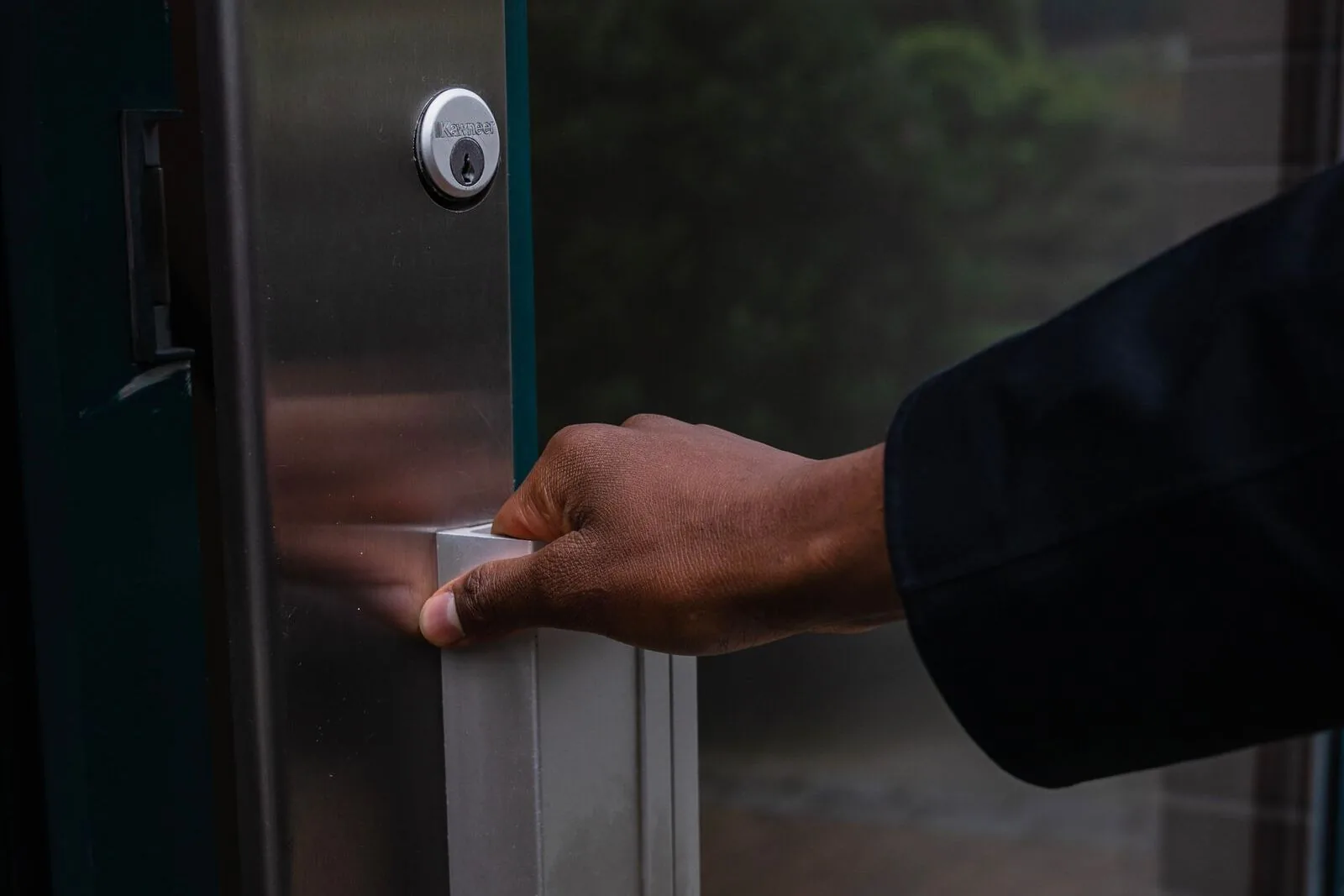
A commercial door stops behaving and the reflex is to call for a new lock. In a fair number of Manhattan jobs, the lock is not the problem, and the ones where it is often need a part rather than a replacement.
Knowing which of the four situations below you are in is worth more than any price list, because it changes the job from a small replaceable part to a whole new lock, and those are very different invoices.
First: it may not be the lock
Before anything gets replaced, these are worth ruling out. All three are common in older Manhattan buildings and none of them is fixed by a new cylinder.
- The door has dropped. Hinges wear, the door sags a few millimetres, and the bolt no longer lines up with the strike. Symptom: you have to lift or shove the door for the key to turn. Fixing the lock does nothing.
- The closer is out of adjustment. A door closer that no longer pulls the door fully home leaves the latch short of the strike. Symptom: the door looks shut but is not latched, and it locks fine if you push it closed by hand first.
- The strike is worn or was never right. Years of the bolt hitting the same edge widens the opening. Symptom: the door rattles in the frame, and the lock feels fine off the door.
A technician who reaches for a replacement lock without checking alignment first is guessing with your money. If your storefront door specifically will not lock at closing time, we walk through that fault in what to do when a NYC storefront door will not lock.
What is actually on your door
Commercial hardware in New York falls into a few families, and the family decides the cost more than the brand does.
- Mortise locks. A rectangular lock body buried in the edge of the door, standard on older office and apartment-building doors. The cylinder is a separate screw-in part. That separation is the whole ball game: a worn cylinder is a small part, a cracked lock body is a much bigger job.
- Narrow-stile storefront hardware. Aluminium-and-glass doors take a slim lock with a rim or mortise cylinder and a hook bolt. Parts are specific to the door manufacturer, which is why "just put any lock on it" is not an option.
- Cylindrical locks. The knob-or-lever style, cheapest to replace, most often found on interior and back-of-house doors.
- Exit devices. The push bar on a fire exit. These are repaired and adjusted far more often than replaced, and they carry a rule covered below.
The cylinder is not the lock
This is the single most useful thing to know before you get a quote. On mortise and storefront hardware, the cylinder — the round part your key goes into — unscrews from the lock body.
So when someone says the lock is bad, the right question is: is the cylinder bad, or the body?
- Key is stiff, sticky, or only works if you jiggle it: usually cylinder wear. A new cylinder, or a rekey, not a new lock.
- Key turns freely but the bolt does not move: the body. That is a replacement.
- You want to change who has keys: neither. That is a rekey — see what rekeying costs in NYC, and multiply by the number of cylinders.
Multi-tenant floors and master keys
If you run a floor with a suite door, interior offices and a server or supply room, you are not buying locks one at a time — you are buying a key system. Done properly, a master key lets one key open everything while each tenant's key opens only their own door.
Two things to know before you commit. First, a master system is designed once and extended later; retrofitting one onto a floor of mismatched hardware usually means replacing cylinders so they share a keyway. Second, ask whether the keyway is restricted — restricted keys cannot be copied at a hardware store, which is the point, but it also means replacements come through an authorised channel and take time. That is a feature, not a delay to be annoyed by, as long as you know about it in advance.
The one thing you cannot do
Every door your staff and customers leave through has to open from the inside without a key, a code, or special knowledge. That principle sits behind exit devices, and it does not bend for a break-in, a difficult tenant or a landlord's preference.
If anyone proposes chaining a fire exit, keying an exit device so it needs a key to get out, or disabling a push bar "just overnight", the answer is no. A locksmith who offers it is telling you something about their judgement.
What changes the price in a commercial building
The hardware is often the smaller half of a Manhattan invoice. The rest is access and timing.
- Building requirements. Most managed buildings want a certificate of insurance naming the building before a vendor is allowed upstairs, and many keep an approved-vendor list. This is not optional and it is not quick. Our vendor document checklist covers what to have on hand.
- When the work happens. Some buildings will not permit hardware work during business hours, and freight elevator access may be limited to set windows. An after-hours rate then applies to a job that would have been cheaper at 10am.
- Whether parts are in stock. Standard cylinders travel on the van. Narrow-stile storefront parts and high-security cylinders are usually ordered, which turns one visit into two.
- The commercial premium itself. Some of it is real — heavier hardware, more liability, more time. Some of it is charged simply because the address is a business. We separated the two in residential versus commercial lockout pricing.
What to send when you request the job
A commercial quote gets much more accurate with three photos and two sentences:
- A photo of the door edge with the door open, showing the lock body and bolt.
- A photo of the face of the lock from the inside and outside.
- A photo of the frame and strike where the bolt lands.
- What the door does wrong, and whether it started suddenly or got worse over months. Sudden usually means something broke; gradual usually means alignment.
- Who can authorise the work and what the building requires from a vendor.
That last line saves the most time. A technician who arrives to find they cannot get past the lobby has still spent the trip.
Getting it done
Our commercial locksmith service in NYC covers offices, storefronts and multi-tenant floors, and explains what to describe when requesting work. You review the estimate before confirming, and if the technician finds the body is cracked when everyone expected a cylinder, that revision comes to you for approval rather than appearing on the final bill.
For the wider picture on what locksmith work costs across the city, see the 2026 NYC locksmith cost guide.

Need a Locksmith in NYC?
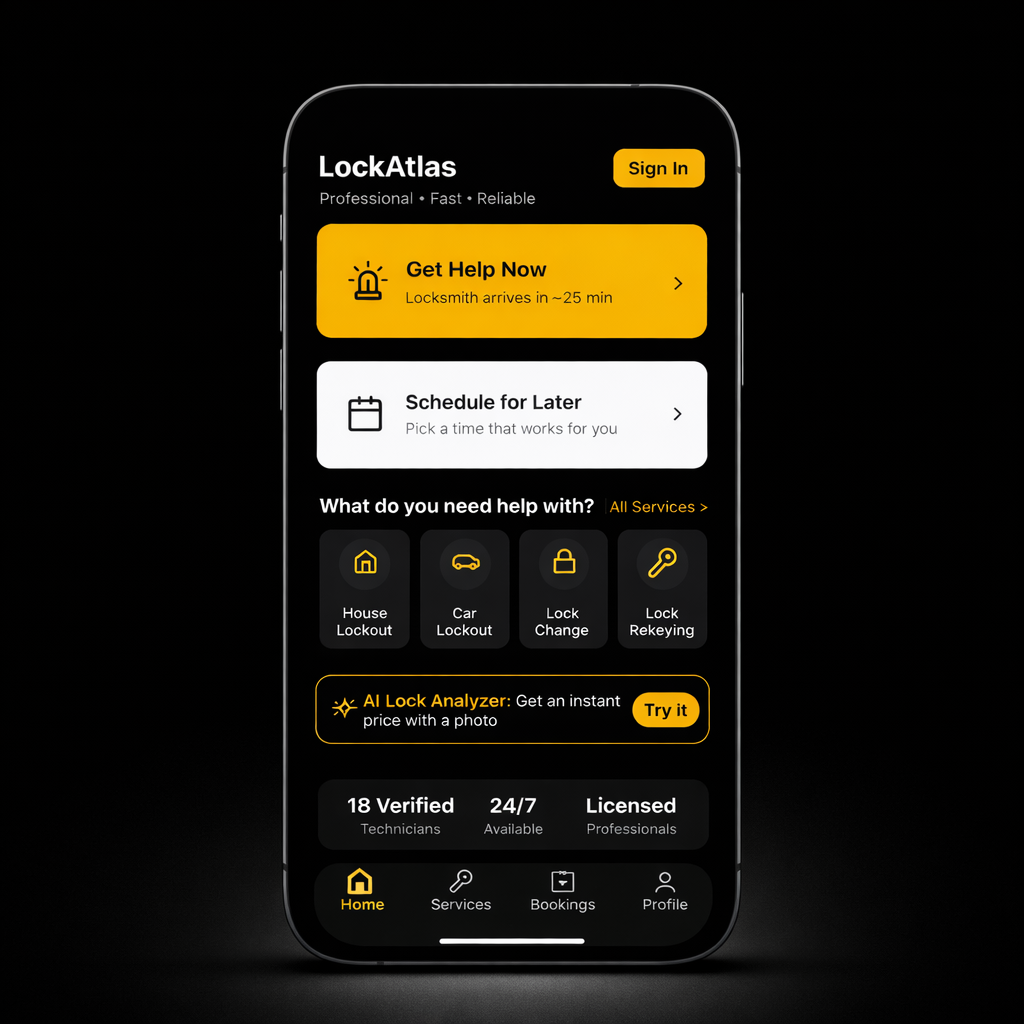
Use the LockAtlas app to describe the work, review the price breakdown and check your booking details.
Download the App