Can Your Landlord Change the Locks in NYC?
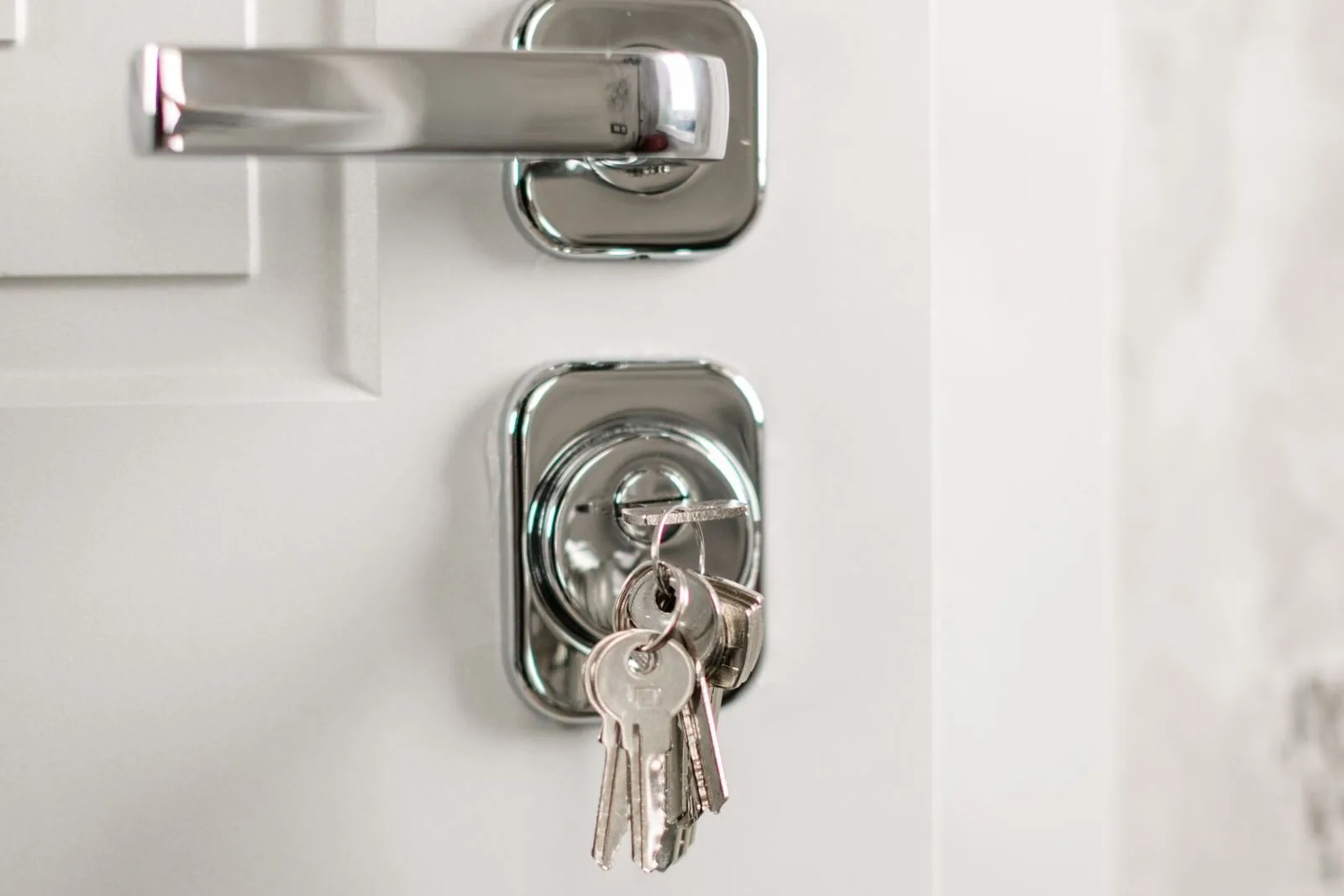
The short answer is no — and the law is less ambiguous about this than most people expect.
In New York City, changing the lock on an occupied home and not giving the occupant a key is unlawful eviction under Administrative Code § 26-521. Not a lease dispute. Not a civil grey area to be argued about later. It is the thing the statute is named after, and it applies whether or not you are behind on rent.
The thirty-day rule decides almost everything
One fact determines your position more than any other, and it is worth knowing before you say a word to anyone.
Under § 26-521, protection covers an occupant who has lawfully lived in the home for thirty consecutive days or more — with or without a lease.
Read that twice, because it is the part people get wrong in both directions:
- You do not need a lease. No lease, an expired lease, a verbal arrangement, your name on nothing — if you have lawfully lived there past thirty days, you are covered.
- You do not need to be current on rent. Owing money does not suspend this. Rent is recovered through a court case, not by removing your door lock.
- It covers more than tenants. A roommate, a subtenant or a family member who has lived there thirty days is protected too, which surprises people on both sides of that conversation.
- Under thirty days is genuinely different. A guest of two weeks is not in the same position, and this article is not a guide to that situation.
Proving the thirty days is usually easy and worth doing before you need it: mail addressed to you there, a utility account, bank statements, a package history, messages arranging the move.
It is not only about locks
People assume a lockout means the key stopped working. The conduct the law covers is broader, and recognising it matters because the less obvious versions are often the ones used deliberately.
- Changing or removing the cylinder, adding a second lock, or blocking the door.
- Removing the door itself, or the door to your room.
- Cutting off heat, hot water, gas or electricity to push you out.
- Removing your possessions.
- Threats or intimidation intended to make you leave.
A lock change that comes with a key handed to you is a different matter entirely. Buildings legitimately replace hardware after a break-in, a lost master key or ordinary wear. The test is not whether the lock changed. It is whether you were given a working key.
The one lawful route
There is exactly one way an occupant is lawfully removed in New York City: a court case, ending in a warrant of eviction, executed by a New York City marshal.
Not the owner. Not the managing agent. Not the superintendent. Not a locksmith, and not the police acting on someone's say-so. A marshal, with a warrant, after a case you were entitled to appear in.
This is why "I gave you notice" is not an answer. A notice starts a process; it does not end one. Until a marshal executes a warrant, the locks stay as they are and you keep a key.
If it has already happened tonight
In this order, because the order matters.
- Photograph everything before you touch it. The door, the new cylinder, any notice taped up, the time on your phone. If the key no longer turns, film yourself trying it. This evidence stops existing the moment someone fixes the lock.
- Go to the police precinct rather than only calling. HPD's own guidance is to report an illegal lockout at the nearest station. Officers sometimes treat it as a civil matter at the door; going in person, saying the words "illegal lockout" and "unlawful eviction," and bringing proof you live there makes a real difference. Ask for a report number either way.
- Start an illegal lockout case in Housing Court. This is the route with actual force behind it. It is filed under Real Property Actions and Proceedings Law § 853, and it can be brought quickly. A judge can order you restored to the home.
- Ask about free representation. HPD points tenants to Legal Aid and Legal Services, and New York City has a right to counsel in eviction cases for tenants who qualify. Ask before assuming you cannot afford help.
- Keep every receipt. A hotel, a locksmith, meals, a cab, time off work. RPAPL § 853 is titled for what it allows: treble damages — up to three times your losses — against someone who put you out unlawfully. Undocumented losses are hard to recover.
What not to do: do not break in, do not force the door, and do not escalate a confrontation in a hallway. The strength of your position comes from the other side having acted unlawfully while you did not.
What a locksmith can and cannot do here
This is the part we get asked about, and it is rarely covered anywhere else — so here is the honest version, including the parts that are inconvenient for us.
A locksmith cannot simply let you back in because you say you live there. Any competent technician will ask for identification and something connecting you to the address. That is not obstruction or suspicion of you; it is the single check standing between a locksmith and helping a stranger into someone else's home. A technician who skips it will skip it for the next person too.
If you have been locked out unlawfully, the lawful route back in is the police and the court — not a technician with a drill. A locksmith letting you past a lock someone else installed, on a door you cannot document, puts both of you in a bad position.
And from the other direction: a locksmith asked to change the locks on an occupied home, with the occupant absent and no warrant, is being asked to take part in a possible crime. The right answer is to decline and ask for the marshal's warrant. Any technician working through LockAtlas is expected to do exactly that, and we would rather lose the job than be the instrument of a lockout.
Where a locksmith genuinely helps is after the situation is resolved: restoring hardware, rekeying properly once you are lawfully back, and documenting what was actually done to your door.
If you are the owner or the agent reading this
The self-help route is not merely risky, it is the expensive one. An unlawful lockout exposes you to treble damages and the tenant's legal costs under RPAPL § 853, on top of whatever rent you were trying to recover — and it does not shorten the process by a day. The marshal route is slower and ends.
The ordinary cases are simpler than people fear. Turnover between tenants, a lost key, hardware failure, a break-in: all fine, all routine. If the home is occupied, the rule is short enough to remember — the occupant gets a working key, the same day. Our after-hours tenant lockout procedure for NYC buildings covers how to handle the 2am version without anyone improvising.
The adjacent situations
Three cases come up constantly and each turns on the same thirty-day question, from a different angle:
- A roommate or partner you want out. If they have lived there thirty days, changing the locks on them carries the same exposure, regardless of whose name is on the lease. This deserves its own article and will get one.
- Public housing. NYCHA has its own rules layered on top of city law — we covered them in NYCHA lock rules and tenant rights.
- Subletting. Control of keys during a sublet is its own tangle, covered in what changes about lock control when you sublet.
And if you are simply locked out — no dispute, no landlord, just a door that will not open — that is a different and much easier problem. Our NYC lockout service explains what to describe when you request one and what the estimate covers before you confirm it, and what to do in the first five minutes at 2am is the practical version.
Sources, and a necessary caveat
This article is general information about how New York City law works, written by a locksmith marketplace. It is not legal advice, your situation will have details that change the answer, and if you are facing eviction or have been locked out you should speak to a lawyer or a tenant advocate rather than rely on a blog post.
- NYC HPD — Tenants' Rights and Responsibilities, on illegal lockouts, the thirty-day rule and where to report one.
- RPAPL § 853 — action for forcible or unlawful entry, and treble damages.

Need a Locksmith in NYC?
Use the LockAtlas app to describe the work, review the price breakdown and check your booking details.
Download the App