Is Your NYC Apartment Lock Bump-Proof? Lock Bumping Explained

Most NYC apartment locks can be defeated in under five seconds by an attacker with a $5 tool and 30 minutes of practice. The tool is a bump key. The technique is called lock bumping. It has been publicly known since the 1970s and widely documented since the 2000s. The locks that resist it cost slightly more and are widely available. Most NYC tenants do not have them.
This piece explains what lock bumping actually is, why it works on standard pin tumbler cylinders, which lock designs structurally resist it, and how to know whether your apartment door is bump-vulnerable.
What lock bumping is
A bump key is a specially-cut key with the cuts at the maximum depth for the lock's pin positions. When inserted into the lock and struck with a small hammer or screwdriver handle, the impact transmits through the key into the pins. The pins jump upward briefly. During the brief moment when the pins are above the shear line, slight rotational pressure on the key turns the cylinder.
The attack works on virtually any standard pin tumbler cylinder. The bump key for a given lock brand fits all locks of that brand because pin tumbler designs use standard depth increments. A Kwikset bump key opens nearly any Kwikset standard cylinder. A Schlage bump key opens nearly any Schlage standard cylinder. The keys are sold openly online for $5 to $15.
The attack takes 1 to 10 seconds for a practiced attacker. It leaves no visible signs of forced entry, which has implications for insurance claims and break-in detection.
The full mechanic was first documented in detail by Dutch locksport researcher Barry Wels in 2002 and has been the subject of public security research since.
Why the technique works on standard pin tumblers
A standard pin tumbler lock has a series of pin stacks. Each stack consists of a key pin (which the key cuts engage) and a driver pin (which spans the shear line when the lock is locked). When the correct key is inserted, all key pins lift their corresponding driver pins to exactly the shear line. The cylinder can then rotate.
In a bumping attack, the bump key has all cuts at the deepest position. When struck, the impact transfers as a physical wave through the key to the bottom of the key pins. The key pins push the driver pins upward and momentarily separate from them. Newton's third law: the driver pins fly up, the key pins stay roughly in place at their lowest position. During the brief window when the driver pins are above the shear line and the key pins are below, the cylinder can rotate.
The mechanism is essentially the same as the Newton's cradle desk toy. Energy transfers through the stack and only the top piece moves significantly.
The vulnerability is inherent to the design. Any lock that relies solely on pin-stack alignment is bump-vulnerable.
Which locks resist bumping
Three design categories structurally resist bumping.
Security pins. Anti-bump pins (spool pins, serrated pins, mushroom pins) are designed so that the pin can become temporarily caught at an intermediate position. The bump motion that would unlock a standard cylinder gets the security pin stuck in a half-engaged state, preventing rotation. Security pins are inexpensive ($1 to $5 per pin), but they have to be specifically installed; most retail consumer locks do not include them.
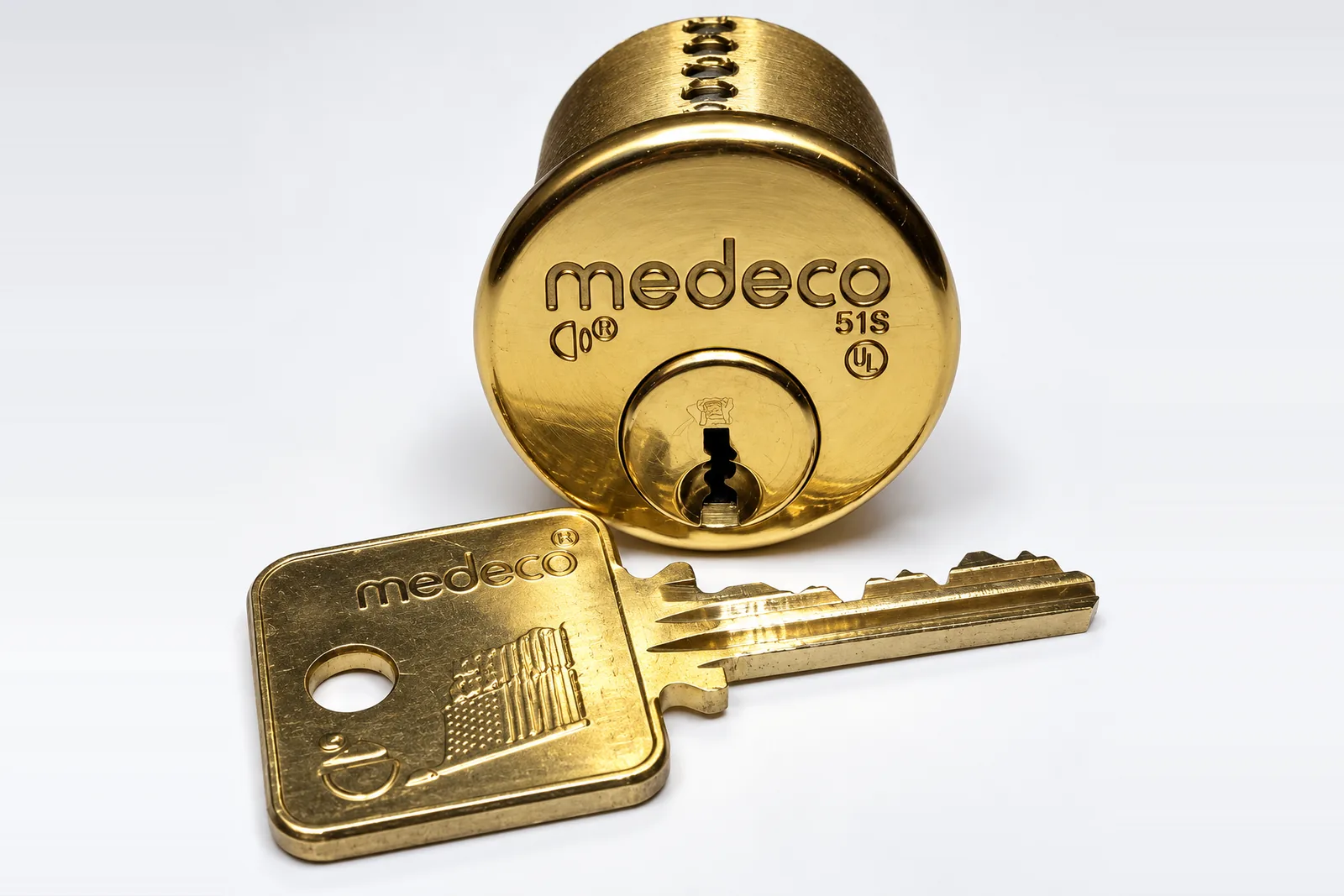
Sidebar designs. Locks like Medeco's angled-pin and Mul-T-Lock's telescoping-pin designs require movement in an additional dimension (rotation, depth) beyond the standard pin-height alignment. A bump attack only addresses the height dimension. Sidebar locks are inherently bump-resistant.
Disc-detainer designs. Locks like Abloy Protec2 use rotating discs instead of pins. There is no pin stack to bump. The mechanism is bump-immune.
For the typical NYC apartment, the practical path to bump resistance is upgrading to a UL 437-certified high-security lock. The lock-by-lock comparison is in Medeco vs Mul-T-Lock vs Schlage.
How to tell if your lock is bump-vulnerable
Four signals that your apartment lock is bump-vulnerable.
The lock is a basic Kwikset, Schlage, Yale, or unbranded cylinder without a "high-security" designation. These are standard pin tumblers. They are bump-vulnerable.
No UL 437 certification. The certification is the formal standard for pick, drill, and bump resistance. Locks without it are typically vulnerable. Check the manufacturer's product page or the lock body for the certification mark.
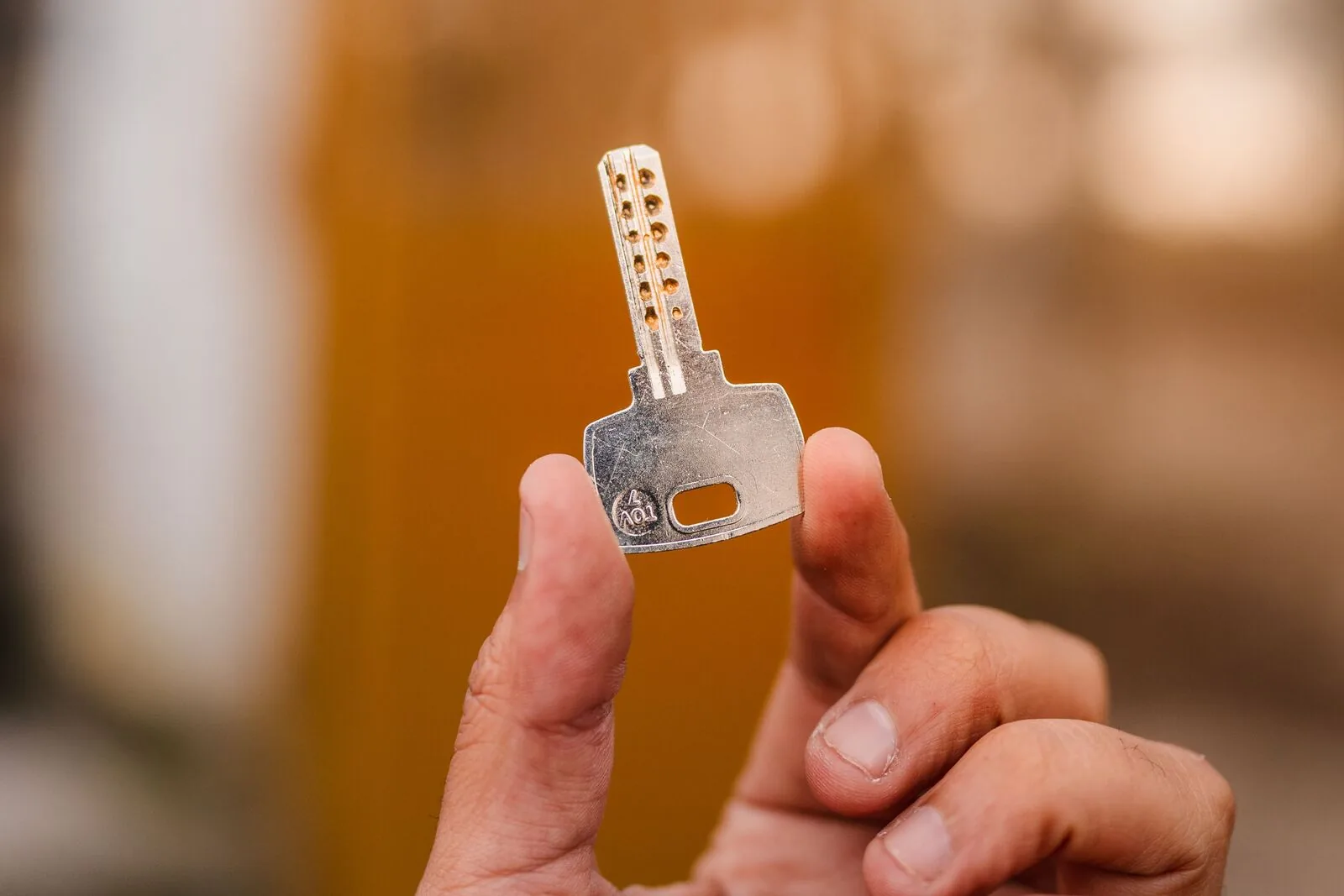
The key looks like a typical "house key." Standard pin tumbler keys have angular cuts of varying depths. High-security keys often have a different visual profile (Medeco keys have angled cuts and slots, Mul-T-Lock keys have dimples on the side, Abloy keys have a unique flat profile).
You bought the lock at a hardware store for under $50. Sub-$50 hardware-store locks are almost universally standard pin tumblers without anti-bump features. Higher-end consumer locks ($50 to $120) sometimes include security pins; high-security locks ($120+) always do.
If any of the four is true, your lock is likely bump-vulnerable.
What this means for residential security in NYC
The risk profile depends on your specific situation.
Ground-floor and fire-escape-accessible apartments. The bump attack is a real risk because attackers can spend a few seconds at the lock without exposure. Pick-resistant locks should be the baseline. Full architecture in pick-resistant locks for ground-floor and fire-escape apartments.
Upper-floor apartments with controlled building access. The risk is lower in absolute terms but the absence of forced-entry signs after a break-in matters for insurance claims and detection. Standard pin tumblers can be replaced affordably; the upgrade is worthwhile.
Apartments where keys have circulated widely. Previous tenants, contractors, former roommates. A bump-vulnerable lock combined with a wide-circulation key history is the worst case. Rekey to a high-security cylinder addresses both. Decision framework in rekey vs replace: when each one makes sense.
What lock bumping is not
The attack has been sensationalized in some coverage. Reality:
It is not undetectable. While the attack leaves no visible damage to the lock, repeated bumping can leave subtle marks on the cylinder face. Forensic analysis after an incident can usually identify whether bumping was used.
It does not work on all locks. UL 437-certified high-security locks are functionally bump-resistant. Many newer consumer locks (after roughly 2010) include some anti-bump features even at mid-tier prices.
It is not a guaranteed entry method. The attack requires the correct bump key for the lock brand, a degree of skill (the strike force and angle matter), and time at the door without observation. In real-world break-in statistics, lock bumping is one technique among many; brute force (kicking, prying) is more common.
The risk is real but specific. Bump-vulnerable locks are not equivalent to "no lock." They are a category of risk that has a known, affordable mitigation.
The cost of upgrading to bump-resistant
A residential lock upgrade from standard pin tumbler to UL 437 high-security cylinder:
- Mid-tier upgrade (Schlage Primus with security pins): $150 to $350 per cylinder installed. Bump-resistant but not bump-immune.
- High-tier upgrade (Medeco, Mul-T-Lock): $250 to $500 per cylinder installed. Functionally bump-immune.
- Top-tier upgrade (Abloy Protec2): $400 to $700 per cylinder installed. Bump-immune by mechanism.
For a typical NYC one-bedroom with one front-door cylinder, the mid-tier upgrade is $150 to $350 total. For a 2-cylinder configuration, $300 to $700. Compared to the value protected by the lock, the math typically favors the upgrade.
Full pricing context is in the 2026 NYC locksmith cost guide.
What changes when you work with a platform-based locksmith
A platform-based booking ensures the upgrade is installed correctly and that the bump-resistance claim is verified. The lock photo at booking identifies the existing cylinder. The platform's pricing model includes the labor for proper installation (including strike plate reinforcement, which matters for overall security architecture). The technician is DCWP-licensed and has documented experience with high-security cylinders.
LockAtlas operates this way for residential lock upgrades. To request a bump-resistant cylinder for your door, start with lock installation in NYC; how the booking works is on the LockAtlas download page.
FAQ
How worried should I be about lock bumping in NYC?
Concern should be proportional to your threat model. Ground-floor and fire-escape apartments in higher-burglary neighborhoods: real concern, upgrade is justified. Upper-floor doorman buildings: less acute concern, upgrade is good hygiene but not urgent.
Can I check if I have anti-bump pins without disassembling the lock?
Mostly no. The pins are inside the cylinder and not visible. The proxies (UL 437 certification, "security pin" label on the lock body) are how you check externally. A DCWP-licensed locksmith can verify during a service call.
Do smart locks resist bumping?
Most smart locks are built on standard pin tumbler cylinders with electronic controls on top. The mechanical bump-vulnerability is preserved. The smart features add convenience, not lock-level security. Full framework in smart locks in NYC rentals.
Will my landlord allow me to install a bump-resistant lock?
Multiple Dwelling Law § 51-c covers a separate tenant lock on an eligible apartment entrance, apart from the owner's lock, with a limit of three inches in circumference and a duplicate key supplied on request. It excludes municipal housing authority units, hotels, motels, and school or college dormitories. It does not give blanket permission to replace or rekey the owner's lock, modify shared doors, or install any chosen device. Check the proposed work against your lease and applicable building requirements before scheduling.
Is the bump key for sale legally?
Yes. Bump keys are sold openly on Amazon, eBay, and locksmith supply sites. The legality of possessing them varies; using them on a lock you do not own is illegal regardless. The accessibility of the tool is precisely why the vulnerability matters.
Bump-vulnerable locks are the default state of most NYC apartments. The upgrade path is well-documented and affordable. Full lock-comparison framework is in Medeco vs Mul-T-Lock vs Schlage. Ground-floor and fire-escape-specific architecture is in pick-resistant locks for ground-floor and fire-escape apartments.
If this has left you wondering what is actually on your own door, the practical next step is not a new brand but a look at the whole opening: cylinder, strike and frame together. Our lock installation service in NYC explains what to send for an accurate quote, and the comparison of Medeco, Mul-T-Lock and Schlage covers which cylinders resist this attack.
LockAtlas is live now on the App Store and Google Play, serving all five boroughs of NYC. Questions or partnerships: support@lockatlas.com
Customer app (book a verified NYC locksmith)
- iOS: LockAtlas on the App Store
- Android: LockAtlas on Google Play
Technician app (apply to receive jobs)

Need a Locksmith in NYC?
Use the LockAtlas app to describe the work, review the price breakdown and check your booking details.
Download the App