Locked Out of Your House in NYC: What to Do, Door by Door
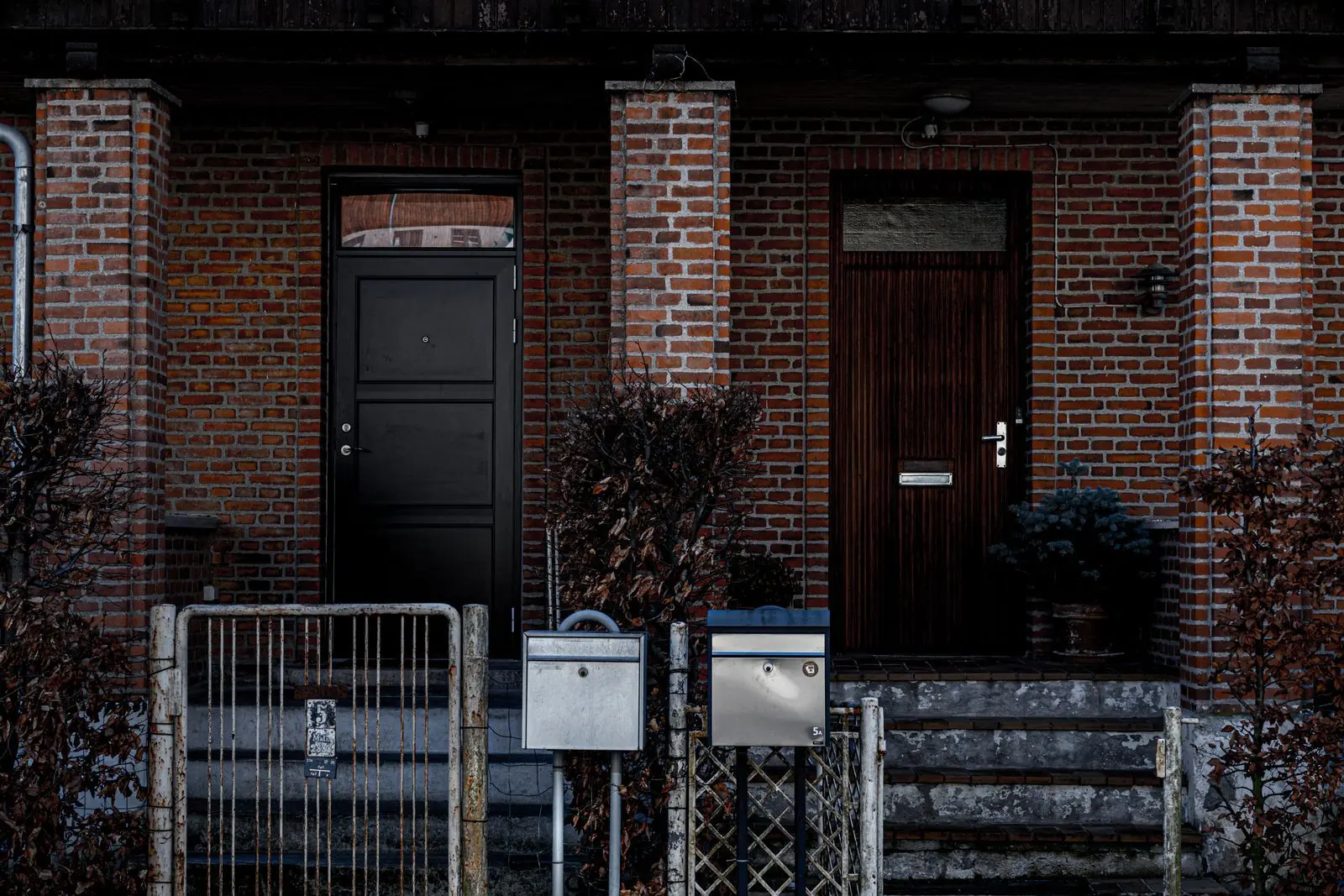
The front door of your house in Queens has just clicked shut behind you, the keys are on the kitchen counter, and there is no super down the hall to call. Before you book anyone, walk the whole house: a house has more ways in than an apartment, and the cheapest one is usually a door that is still unlocked or a spare key that is a short ride away.
If none of that works, the usual answer is a locksmith who opens one door without damage, after seeing something that ties you to the address. And if anyone or anything inside is in danger, call 911 first and think about locks later.
Call 911 first if someone inside is in danger
Some lockouts are not locksmith jobs. Call 911 straight away if:
- a child is inside alone, or an adult who cannot get to the door or open it;
- a pet is inside and in danger;
- something is cooking on the stove, a space heater or an iron is on, or you smell gas or smoke.
Do not wait for a booking or an estimate while any of that is happening. Tell the operator you are locked out and who or what is inside. Everything below assumes nobody is at risk.
The first five minutes: check the whole house
An apartment usually gives you one door to try. A house gives you several, plus people nearby who may hold a key. Work through this list before you spend anything.
- Every door, not just the front. Try the side door, the back door, the basement or garden-level door under the stoop, and any door to the yard. Turn the handle on each one. A back door left unlocked after someone took out the trash ends a lockout in two minutes.
- The garage. If there is a garage remote in your car or you know the keypad code, use it. The door from the garage into the house is sometimes left unlocked. Use only a remote or code you already have.
- Who has a spare. A parent or sibling elsewhere in the city, the neighbor who takes in your packages, a cleaner, a dog walker. A car service ride to bring a key over often costs less than a lockout.
- The other unit. In a two-family house, the tenant or relative in the other apartment may have a key to the shared front door or hallway, which at least gets you out of the weather. Ask, and remember that their apartment is their home: nobody goes through it unless they offer.
- The alarm, before anyone opens a door. If the house has a monitored alarm and it is armed, call the monitoring company now. Tell them you are locked out and a locksmith may open a door, and confirm your passcode, so an alarm at your own door is expected rather than a surprise. If the keypad is inside, have your code ready for the moment the door opens.
As you go, note what is holding each door shut: a storm door handle, a knob lock, a deadbolt, a gate padlock. That list is the most useful thing you can give a locksmith.
What not to do, even at your own house
When the house is yours, climbing in can feel reasonable. It rarely ends well.
- Do not climb. Not up to a second-floor window, not over a porch roof, not down into a basement window well. A fall costs far more than any locksmith.
- Do not break a window. You then need new glass, sometimes a new sash in an older house, and a way to secure the opening for the night.
- Do not force a door. Kicking or shouldering a door tends to split the frame around the strike plate before the lock gives, so you end up paying a carpenter as well as a locksmith.
- Do not unscrew window gates or bars to get in. A gate put back in a hurry may not open properly when someone inside needs it to.
- Do not help anyone in who cannot show they live there. That includes a relative who has moved out, or an owner trying to reach a tenant's apartment. Owning the building does not make someone else's home yours to open.
Expect the same standard to apply to you. A legitimate locksmith asks for something that ties you to the address before opening anything. What usually works is a photo ID showing the address, a utility bill or bank statement, a lease, or a deed, property tax bill or mortgage statement, and a copy on your phone is often enough. Policies differ, so treat this as practical advice, not a legal checklist. If your wallet is inside, say so when you book and ask what else the provider accepts. A technician who opens a house without asking a single question would do the same for a stranger at your door.
How a house lockout differs from an apartment lockout
The apartment version is one door in a hallway, and we walked through it step by step in locked out of your apartment at 2 AM. A house changes the job in a few ways.
- More doors to choose from. The technician does not have to open the front door. A side or back door with only a knob lock engaged is often a quicker, cleaner way in, and once inside you can open everything else from the inside.
- Deadbolts on every door. Houses usually have a deadbolt on each exterior door, and careful owners throw all of them. A thrown deadbolt takes more work than a spring latch. A slide bolt or bar fastened on the inside of a back door, with no keyhole outside, cannot be opened from outside without damage, so that door comes off the list.
- Storm doors and vestibules. Many houses have a storm door with its own lock in front of the main door, and Brooklyn brownstones and rowhouses often have an outer door and an inner vestibule door, each locked separately. Count every one.
- Gates, padlocks and garages. A locked front gate or a padlocked side gate can stand between the street and every door. On Staten Island, our Staten Island locksmith page lists gate, fence and garage locks alongside home lockouts; wherever you are, mention them when you book.
- A mix of old and new hardware. A house collects locks over decades: an original mortise lock, a newer deadbolt, a cheap knob on the basement door. In the Bronx, from a Riverdale house to a two-family in Pelham Bay, our Bronx locksmith page explains what to describe when you request help.
Why non-destructive entry is the default. Most residential locks can be opened by picking or similar techniques that leave the lock working. Drilling destroys the cylinder, which then has to be replaced, so it needs a reason: a high-security cylinder, a broken mechanism, or a lock that resisted everything else. With several doors, a house usually has one that opens cleanly. If drilling is proposed, ask why, which door, and what the replacement will cost before you agree.
If a lock does have to be replaced on a door a tenant also uses, everyone who lives there needs a working key the same day. NYC HPD's tenant rights page says that changing the locks on a resident's apartment without giving the resident a key violates the Unlawful Eviction Law, and that this protects tenants with a lease and occupants who have lawfully lived there more than thirty days. A shared front door is how the tenant reaches their apartment, so get their new key cut in the same visit. If you own a two-family house in Queens, our Queens locksmith page covers what to describe for that kind of home.
What a house lockout costs, and what to describe when you book
For a residential lockout on a standard lock, our 2026 NYC locksmith cost guide puts typical market ranges at $80 to $220 during standard hours, roughly 8 AM to 8 PM on weekdays, and $130 to $300 outside them. For a high-security lock such as Medeco or Mul-T-Lock, the guide gives $150 to $400 in standard hours and $200 to $500 outside them. These are market ranges to check a quote against, not a price list.
On a house, three things move the number: how many locks are engaged on the door being opened, whether any is high-security, and the hour. Ask whether an estimate covers every lock on that door, including a storm door or gate. If nobody is at risk and you have somewhere warm to wait, the morning may cost less.
When you request help, describe:
- which doors you tried, and which looks like the best way in;
- every lock on that door, with a photo if you can take one;
- any storm door, gate or padlock in the way;
- whether an alarm is armed;
- whether a tenant lives in the house;
- what you can show to prove you live there.
To put all of that in one request, use our house lockout service in NYC: describe the door and the problem, check availability and review the estimate in the app before confirming. If the keys are lost rather than sitting on the counter, getting in is only half the job. Once inside, rekey every exterior lock that key opened, and use our guide on counting every exterior lock on a house so the basement door and the gate are not missed.
FAQ
What should I do if I locked my keys in my house?
If anyone or anything inside is in danger, call 911. Otherwise try every door and the garage, call whoever holds a spare, ask the other unit, and call the alarm company if the alarm is armed. Then book a locksmith and have proof of address ready.
I'm locked out of my house with no spare key. Can I get in without a locksmith?
Only through access you already have: an unlocked door, a garage remote or keypad code, a smart lock app, or someone in the house. Climbing, breaking a window or forcing a door usually costs more than the lockout. Once back in, leave a spare with someone you trust nearby.
Should I call 911 if I'm locked out of my house?
Yes, when someone or something inside is in danger: a child or vulnerable adult alone, a pet at risk, something on the stove. If everyone is safe outside, use a spare or a locksmith.
How much is a house lockout in Queens or Brooklyn?
The cost guide finds pricing roughly uniform across the boroughs among the larger companies, so the ranges above apply. On a house, the locks on the door being opened and the hour matter more than the borough.
Where LockAtlas fits
In the LockAtlas app you describe the door and the problem, check availability and review the estimate in the app before confirming. The technician is verified before they can take the job, and if the technician finds something different, such as a lock that has to be drilled and replaced, the revised price comes back to you for approval before that work starts.

Need a Locksmith in NYC?
Use the LockAtlas app to describe the work, review the price breakdown and check your booking details.
Download the App