NYC police locks and jimmy-proof deadbolts, explained
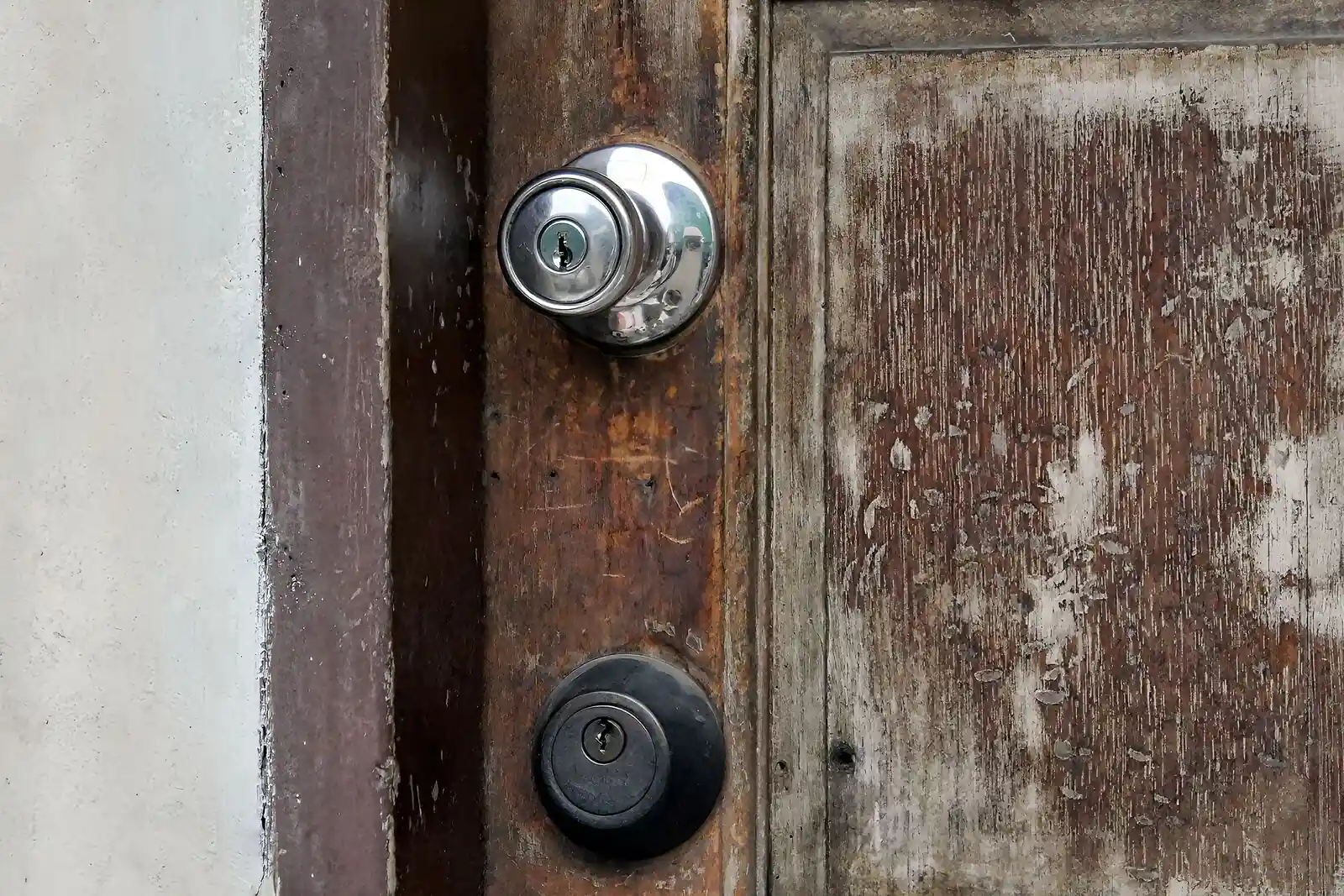
Your new ground-floor apartment in Washington Heights came with two locks you have never used, and you are wondering whether either one would stop a break-in or slow you down in a fire. One is a steel bar that runs at an angle from a plate in the floor up to a lock box on the inside of the door. The other is a metal case above the knob, with a thumb-turn on the inside and a key cylinder on the outside.
The short version: an NYC police lock is a steel bar braced between the floor and the inside of the door, and a jimmy-proof deadbolt is a surface-mounted lock whose bolts slide vertically through rings on a strike fixed to the frame. Either one has to open from inside without a key: HPD calls double cylinder locks that need a key from inside the apartment “dangerous, illegal” and says they “must be removed.” In a building with three or more apartments, Multiple Dwelling Law § 51-c lets a tenant add a lock of their own, NYCHA, hotels and dorms aside, as long as the landlord gets a duplicate key on request.
What an NYC police lock is, and what it stops
A police lock, also called a brace lock, is a steel bar set at an angle between a plate fixed to the floor and a lock box on the inside face of the door. You may hear it called a Fox lock or a Fox police lock, after a brand name. Locked, the bar turns a push on the door into a push against the floor, not against the strike on the frame. Versions with a cylinder through the door can be worked with a key from the hallway. From inside, it has to release by hand. A related design, the double-bar lock, slides two bars sideways into brackets on both sides of the frame.
It stops a door being forced inward by kicking or shouldering. It does nothing against someone who can work the outside cylinder, or against entry through a window or a fire escape, which our guide to pick-resistant locks for ground-floor apartments covers. Because the bar holds by pressing against the floor, it suits a door that swings into the apartment, and it is only as strong as its floor plate: a loose plate, or a cracked floor around it, is the weak point.
How a jimmy-proof deadbolt works
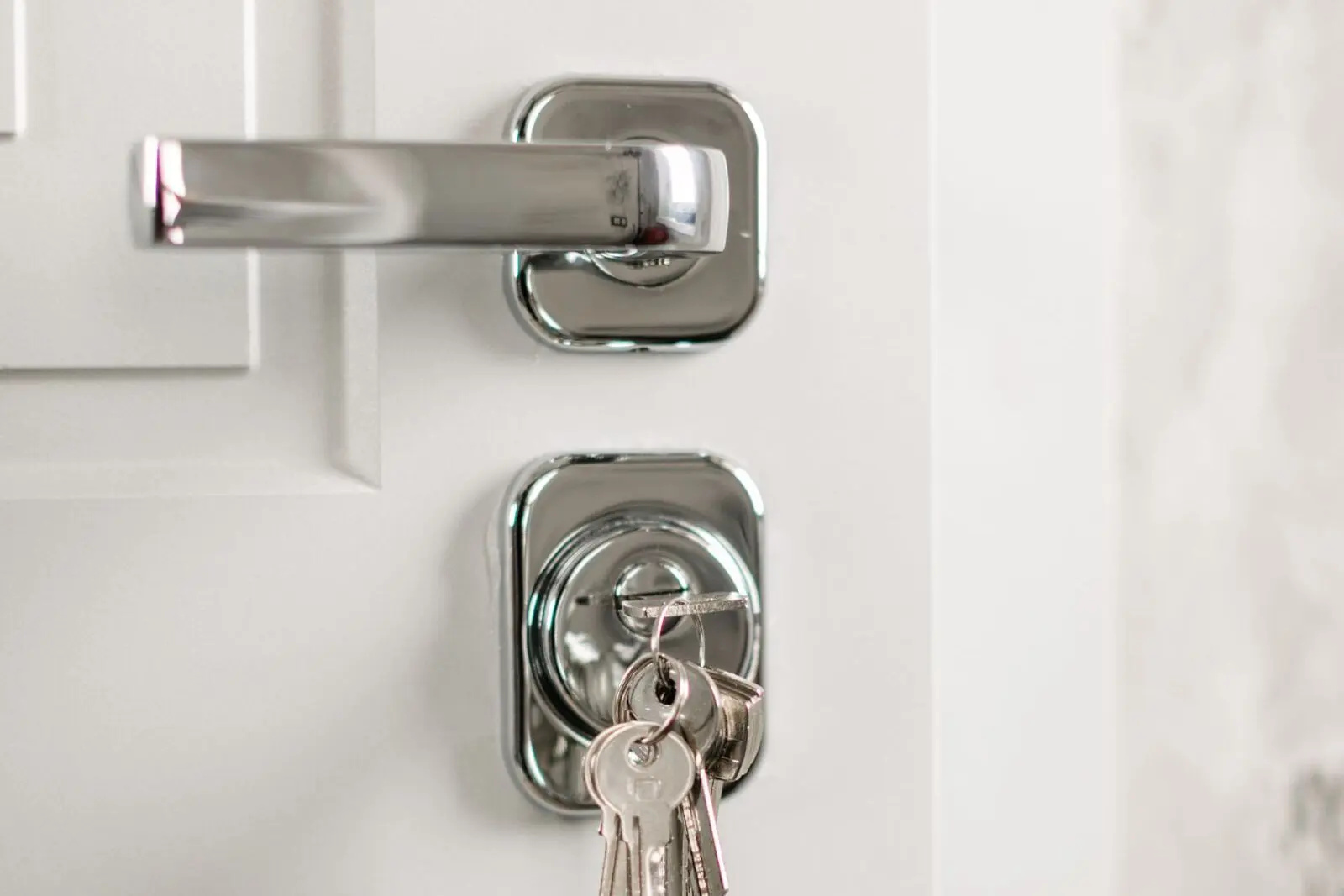
A jimmy-proof deadbolt is a rim lock: its case mounts on the inside face of the door, a cylinder passes through the door for the key, and a thumb-turn works it from inside. Its strike, fixed to the frame, carries a set of rings, and when you turn the key or the thumb-turn, the bolts slide vertically through them. To jimmy a door is to pry it away from the frame until the bolt slips free. With vertical bolts through the strike’s rings, the door and the frame are locked to each other, so prying the gap does not release them.
The NYPD names this kind of lock. Its Safeguard Your Apartment tip sheet says to “use a deadbolt lock with a one-inch bolt throw or a heavy duty drop-bolt lock,” drop bolt being another name for a vertical bolt, and to “install a pick-resistant cylinder.”
Jimmy-proof deadbolt installation is mostly about the strike. The cylinder needs a clean hole through the door, the case has to be fastened firmly (through-bolted on a hollow metal door), and the strike has to line up so the bolts slide fully through its rings without anyone pushing on the door. Screwed into a soft or split wood jamb, that strike can be kicked out with the lock still locked; our guide to door frame reinforcement covers the frame side.
The NYC rule both locks must pass: open from inside without a key
City rules on apartment doors are about getting out. The 2022 NYC Building Code, in § 1010.1.9.3, lets doors from individual dwelling units be equipped with “a night latch, dead bolt or security chain, provided such devices are openable from the inside without the use of a key or tool.” HPD’s ABCs of Housing tenants’ guide is blunter: double cylinder locks on doors “that require a key from inside the apartment to unlock or to access the hallway or fire escape are dangerous, illegal and must be removed,” because “a delay in finding or using the key can reduce a tenant’s chances of escape.” HPD lists “door locks that require a key to exit” among the ten safety issues it always inspects for.
The NYPD sheet says the same from the security side: “Do not use a double-cylinder lock; that is, a lock that has a key on both sides. It can be deadly if a fire breaks out.” For these two locks the test is simple. A police lock that releases by hand and a rim lock with a thumb-turn pass. Either one with a keyway on the inside fails, and so does a padlock on an inside hasp.
What a tenant may add, and what the landlord already owes
The owner’s hardware comes first. Under Housing Maintenance Code § 27-2043, the owner of a dwelling “shall provide a key lock in the entrance door to each dwelling unit and at least one key.” In a class A multiple dwelling, meaning one “occupied for permanent residence purposes,” that door “shall be equipped with a heavy duty latch set and a heavy duty dead bolt operable by a key from the outside and a thumb-turn from the inside,” plus a chain door guard. A police lock or a jimmy-proof deadbolt goes on top of that, not in place of it. If the owner’s lock or chain guard is missing or broken, HPD’s guide says tenants can file a complaint by calling 311.
The tenant’s side is Multiple Dwelling Law § 51-c. A tenant of a multiple dwelling may install a lock in the entrance door of their unit, “separate and apart from any lock installed and maintained by the owner” and “not more than three inches in circumference,” provided that “a duplicate key to such lock shall be supplied to the landlord or his agent upon his request.” A lease clause that charges extra for that right is “void as against public policy.” The section does not cover tenants of a municipal housing authority such as NYCHA, or hotels, motels and dormitories. In a co-op or condo, read the house rules and ask the managing agent too.
The statute leaves two practical questions open. It describes a lock in the entrance door, and a police lock also anchors a plate in the floor, so get the building’s OK in writing before anyone drills the floor. And on a fire-rated door, any new hole for a rim cylinder is a question for the building first; our guide to adding a deadbolt to a metal apartment door covers the fire label, the self-closer and the thumb-turn.
When replacing a police lock or rim lock is the job
An add-on lock is due for work when:
- It needs a key to open from inside. A double-cylinder version has to go; replace it with a thumb-turn or hand-release model.
- Keys are lost or unaccounted for. The outside cylinder can be rekeyed or replaced, and the lock body can often stay.
- The bolts no longer slide fully into the strike. If you have to push or lift the door to lock it, the door has sagged or the strike has moved. Realign first; a new lock on a misaligned door has the same problem.
- The police lock’s floor plate is loose, or the bar is bent. Reset or replace the plate before you trust the bar.
- The case is cracked, the thumb-turn slips, or the lock rocks on the door. Stripped screws in a hollow metal door call for through-bolts, not bigger screws.
- The door no longer closes and latches by itself. Buildings with three or more apartments must have self-closing doors, the FDNY and HPD flyer says, and tenants should not block them, so a lock that catches the door has to be fixed.
Rim locks and supplemental apartment locks, where the building permits them, are on the list of jobs for our lock installation service, as is deadbolt installation in NYC if you would rather have a bolt bored into the door than a surface lock.
FAQ
What is a police lock?
A steel bar braced between a plate in the floor and a lock box on the inside of the door. It resists the door being forced inward, and in an NYC apartment it has to release by hand from inside, without a key.
Is a double cylinder deadbolt legal on an NYC apartment door?
No. HPD says double cylinder locks that require a key from inside the apartment are “dangerous, illegal and must be removed,” and its inspectors check for door locks that require a key to exit.
Can I put a police lock on my NYC apartment door?
Multiple Dwelling Law § 51-c lets a tenant in a building with three or more apartments add a lock of their own, with a duplicate key to the landlord on request; NYCHA, hotels and dorms are excluded. Because a police lock also anchors a plate in the floor, get the building’s written OK first.
What is an NYC style deadbolt?
The phrase has no fixed meaning in the trade. Ask whether the person means a surface-mounted vertical-bolt lock or a deadbolt bored through the door.
How high should a second lock go?
The NYPD’s tip sheet says additional locks “should be installed 12 to 18 inches above or below the doorknob,” and asks you to think about children, older people and people with disabilities before mounting a lock too high.
Where LockAtlas fits
If the job is installing an add-on lock, replacing an old one or swapping a double-cylinder lock for a thumb-turn model, describe it in the LockAtlas app, with photos of the inside face of the door, the frame and, for a police lock, the floor plate. You see the full price before you book: a service fee that varies by time of day and day of the week, a flat labor price for the job, parts if needed, and 8.875% NY sales tax; our pricing page walks through that breakdown. A photo may not show everything, so if the technician finds something different at the door, the change comes to you in the app to approve or decline. After booking, a temporary hold for the quoted price is placed on your card (for a visit more than 3 days away, 3 days before); it is not a charge, and you pay only when the job is done. Locksmith licensing in NYC is individual, so you can check the technician’s name and license number with DCWP before work begins (individual licensing ends May 31, 2027, when DCWP moves to a Locksmith Business license). When you are ready, get the LockAtlas app.

Need a Locksmith in NYC?
Use the LockAtlas app to describe the work, review the price breakdown and check your booking details.
Download the App