Same-day lock change after a break-in: the right sequence

Coming home to find your apartment door damaged and the lock compromised is a singular kind of crisis. The instinct is to panic and call the first available locksmith. The right approach is more deliberate. The sequence in the next 24 hours determines whether you're properly secured by tomorrow morning or whether you've made several expensive decisions in the wrong order.
This piece walks through the proper sequence: police, documentation, immediate security, lock change, and recovery.
The first 30 minutes: do not enter
If you arrive home and notice signs of break-in (damaged door, broken window, items disturbed), the first 30 minutes are critical.
Do not enter the apartment. The perpetrator may still be inside. The scene is also evidence; entering disturbs it.
Call 911. Even if the perpetrator is gone, the police visit creates the official record needed for insurance claims, NYC Housing Court actions, and any criminal proceedings.
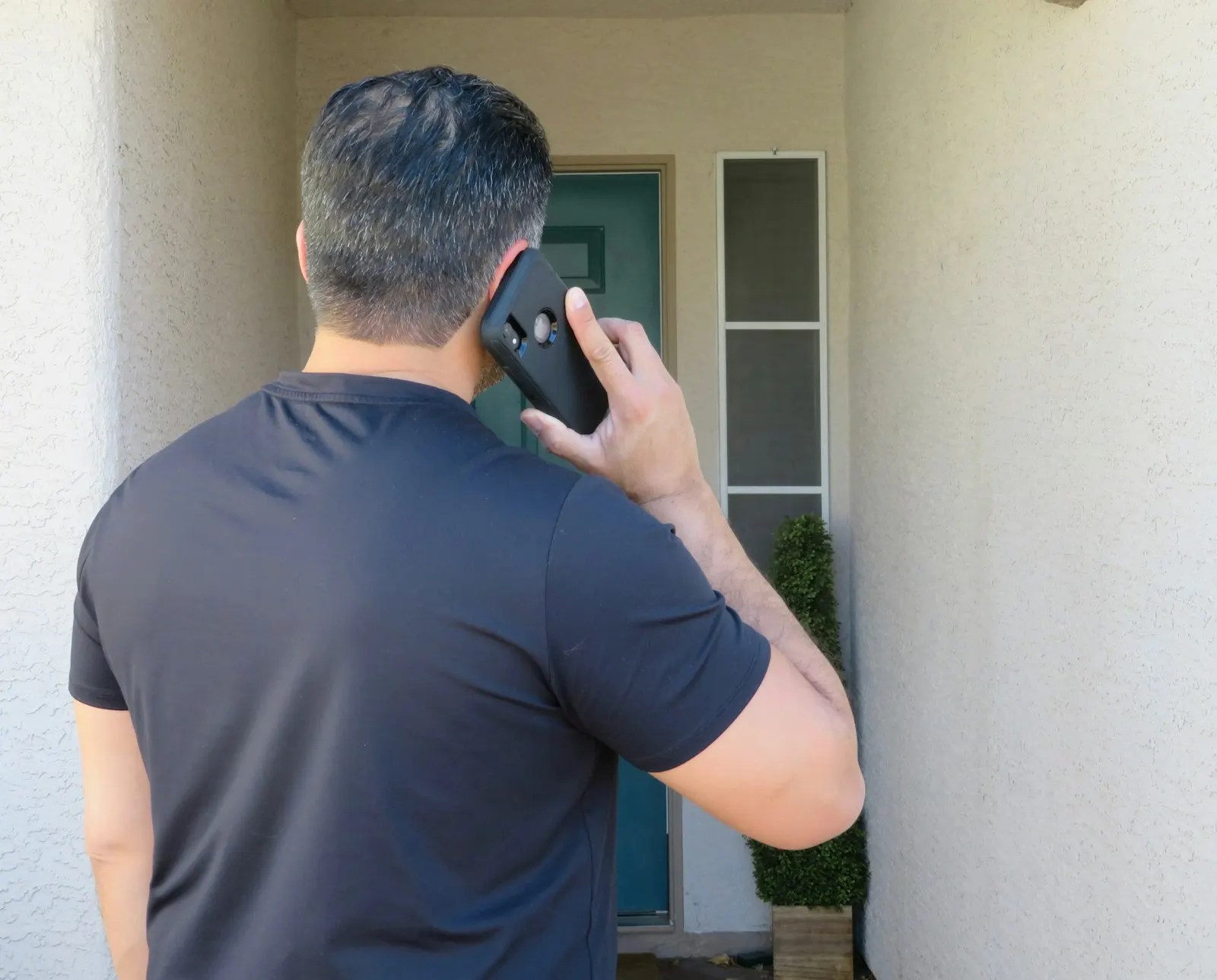
Stay nearby in a safe location. A neighbor's apartment, the building lobby, or the street outside. Do not stand at your door.
Take photographs from outside. Wide shots of the door, the entry point, any obvious damage. These are your first piece of evidence.
The police will arrive (NYC NYPD response time for non-violent break-in calls is typically 15-45 minutes). They'll do a walkthrough and create an incident report. You'll receive a report number.
After the police: secure the property
Once the police have cleared the scene and you've been given the incident report number, your next priority is securing the apartment.
Document everything before you change anything. Walk through the apartment with the police if they're available, photographing each room. Note what's missing, what's disturbed. The detail matters for insurance and any criminal proceedings.
Identify the entry point. Where did the perpetrator get in? Was the lock compromised? Was a window broken? Was the door kicked in? The entry point determines what to fix immediately.
Call a DCWP-licensed locksmith. Use the verification checklist. For a break-in scenario, the right ask is "I need a same-day emergency lock change with potential door repair." Get a written quote.
Don't rush to repair major damage. A damaged door frame may need carpenter work, not just locksmith work. Don't authorize lock replacement on a damaged frame; the lock will fail.
What the locksmith should do (and what they shouldn't)
A break-in scenario requires more than a standard lock change. Three priorities for the locksmith visit:
Priority 1: Replace the compromised lock(s). Both the deadbolt and any other entry locks (knob lock, mortise, supplementary deadbolts). If the previous lock was picked, drilled, or bumped, the new lock should be UL 437 certified for resistance to those attacks. See Medeco vs Mul-T-Lock vs Schlage and pick-resistant locks for ground-floor and fire-escape apartments for choosing the right replacement.
Priority 2: Upgrade or repair the strike plate. If the door was kicked in, the strike plate failed. The new install must include 3-inch screws into framing studs, not just the jamb. Discussion in door frame reinforcement: strike plates, hinges, and security plates.
Priority 3: Inspect the door and frame integrity. A damaged door or split frame is a security failure regardless of the lock. The locksmith should identify if carpenter work is needed before the new lock can be installed properly.
What the locksmith should not do:
- Install a high-security lock on a damaged frame without addressing the frame first.
- Charge for the trip if the conditions on-site significantly differ from what was discussed on the phone (you didn't anticipate frame damage; that's a separate scope).
- Pressure you into a more expensive lock than what your threat model requires.
The break-in is not a sales opportunity for the locksmith. It's a scenario where the customer's verification and skepticism are especially important.
What the locksmith should charge
Real 2026 NYC pricing for a break-in emergency lock change:
Same-day lock change, standard hours, single cylinder, no frame damage: $150 to $300. Standard hours pricing applies if the call is during 8 AM - 8 PM weekdays. The price is the standard lock change cost; the urgency doesn't change the price.
Same-day lock change, overnight, single cylinder, no frame damage: $200 to $400. Overnight surcharge applies.
Lock change plus high-security upgrade, standard hours, single cylinder: $300 to $600 for a Medeco or comparable installation.
Lock change with strike plate replacement, standard hours: $200 to $400 total.
Lock change with frame damage requiring carpenter, standard hours: $400 to $1,500+ total depending on damage extent.
If the locksmith quotes significantly above these ranges, apply the verification checklist. The break-in scenario does not justify pricing that's outside the standard ranges.
Full pricing context: the 2026 NYC locksmith cost guide.
After the lock change: documentation for insurance
Insurance claims after a break-in require detailed documentation. After the immediate security is restored:
Photograph the new locks and any repair work. Date-stamped photos of the upgrade are evidence of the post-incident response.
Save the locksmith invoice. The invoice documents the work performed and the cost. Both are relevant for insurance.
Make a list of stolen items. For each item, note: description, approximate value, where it was, when you last saw it. Photographs of items you remember (before they were stolen) are valuable.
Get the police report number from the incident report. You'll need this number for the insurance claim.
Contact your renter's or homeowner's insurance. File the claim within 24-48 hours. Provide the police report number, the locksmith invoice, photographs, and the item list.
What insurance typically covers
For a NYC residential break-in:
Usually covered:
- Lock replacement and upgrade
- Door repair
- Window repair if broken during entry
- Stolen items (subject to policy limits)
- Damage to interior items (broken vases, picture frames, etc.)
- Temporary housing if the apartment is unlivable
Sometimes covered:
- Loss of cash (typically capped at $200-500 per claim)
- Loss of jewelry (subject to specific limits, often $500-2,000 unless scheduled)
- Loss of electronics (typically full coverage but check policy)
- Cleaning and restoration if forensic processing left damage
Usually not covered:
- Replacement of family heirlooms beyond market value
- Sentimental items (no monetary recovery for emotional value)
- Damage from prior incidents
Document everything. Your policy's specific terms determine coverage limits.
The 30-day recovery beyond the lock change
The lock change is the immediate fix. The longer-term recovery includes:
Days 1-7: Insurance claim filing, police follow-up, lock and door repair completion.
Days 7-30: Insurance settlement, repair completion of any extensive damage, replacement of stolen items.
30 days onward: Long-term security improvements (alarm system, additional locks, building security review, neighborhood awareness).
The traumatic aspect of a break-in often takes longer to process than the financial recovery. Allow time. The structural changes (better locks, better awareness) reduce future risk significantly.
What changes when you upgrade beyond the original lock
A break-in is often the moment to upgrade beyond what was on the door before. Three reasonable upgrades:
Upgrade from Grade 3 to Grade 1 deadbolt. Significantly better forced-entry resistance. See deadbolt grades explained.
Upgrade from standard cylinder to high-security cylinder. Significantly better pick, drill, and bump resistance. See Medeco vs Mul-T-Lock vs Schlage.
Add restricted keyway for key control. Significantly better control over who has keys going forward. See restricted keyways: setting up key control as a NYC tenant.
These upgrades, individually or combined, are typically $200-700 more than a same-cost lock replacement. The post-break-in moment is often the right time to invest in the upgrade rather than going back to the same security level that just failed.
What changes for a platform-based booking
A platform-based booking for a break-in scenario provides several advantages:
Verify the attending locksmith’s current credential through the official NYC lookup. Ask separately about relevant insurance and any claimed screening. Confirm the proposed work and charges before approving it.
Photo-based pricing. Even with damaged conditions, the platform's pricing model accounts for the actual lock and door situation.
Fast scheduling. Same-day or next-day booking is built into the platform.
Documentation. The platform automatically documents the technician, the work performed, and the invoice for insurance purposes.
LockAtlas operates this way. The mechanism is on the LockAtlas download page.
FAQ
Can I stay in my apartment after the break-in if it's not secured?
Wait for the lock change before staying alone overnight. If the lock change is happening the same day, staying with a neighbor or family member for the few hours until completion is reasonable.
Should I tell my landlord about the break-in?
Yes, immediately. The landlord has obligations and may have building-wide security responses. Notification supports any insurance claim and any structural repair the building needs to make.
Will my renter's insurance rates go up after a claim?
Sometimes yes, by 5-15% at renewal. The increase is smaller than the typical break-in loss. Some insurers also offer post-incident "security upgrade" credits.
What if I'm not sure if it was a break-in or if I just left the door open?
Even ambiguity should trigger the safe protocol. The police visit is free. The lock change is reasonable insurance against potential ongoing risk. Treat ambiguous signs as potential break-in until investigation clarifies.
How long does the full recovery take?
Immediate security: same day. Stolen item replacement: 7-30 days depending on availability. Insurance settlement: 30-90 days. Emotional and behavioral recovery: longer, varies by individual.
A break-in is one of the worst scenarios for a NYC apartment dweller. The sequence in the first 24 hours determines how recoverable it is. Police, documentation, immediate security, and proper lock upgrade are the foundation. Full lock-comparison context: Medeco vs Mul-T-Lock vs Schlage. Pricing benchmarks: the 2026 NYC locksmith cost guide. Insurance and recovery: the 30-day recovery playbook.
LockAtlas is live now on the App Store and Google Play, serving all five boroughs of NYC. Questions or partnerships: support@lockatlas.com
Customer app (book a verified NYC locksmith)
- iOS: LockAtlas on the App Store
- Android: LockAtlas on Google Play
Technician app (apply to receive jobs)

Need a Locksmith in NYC?
Use the LockAtlas app to describe the work, review the price breakdown and check your booking details.
Download the App