NYC office access control: keypad, fob or card reader
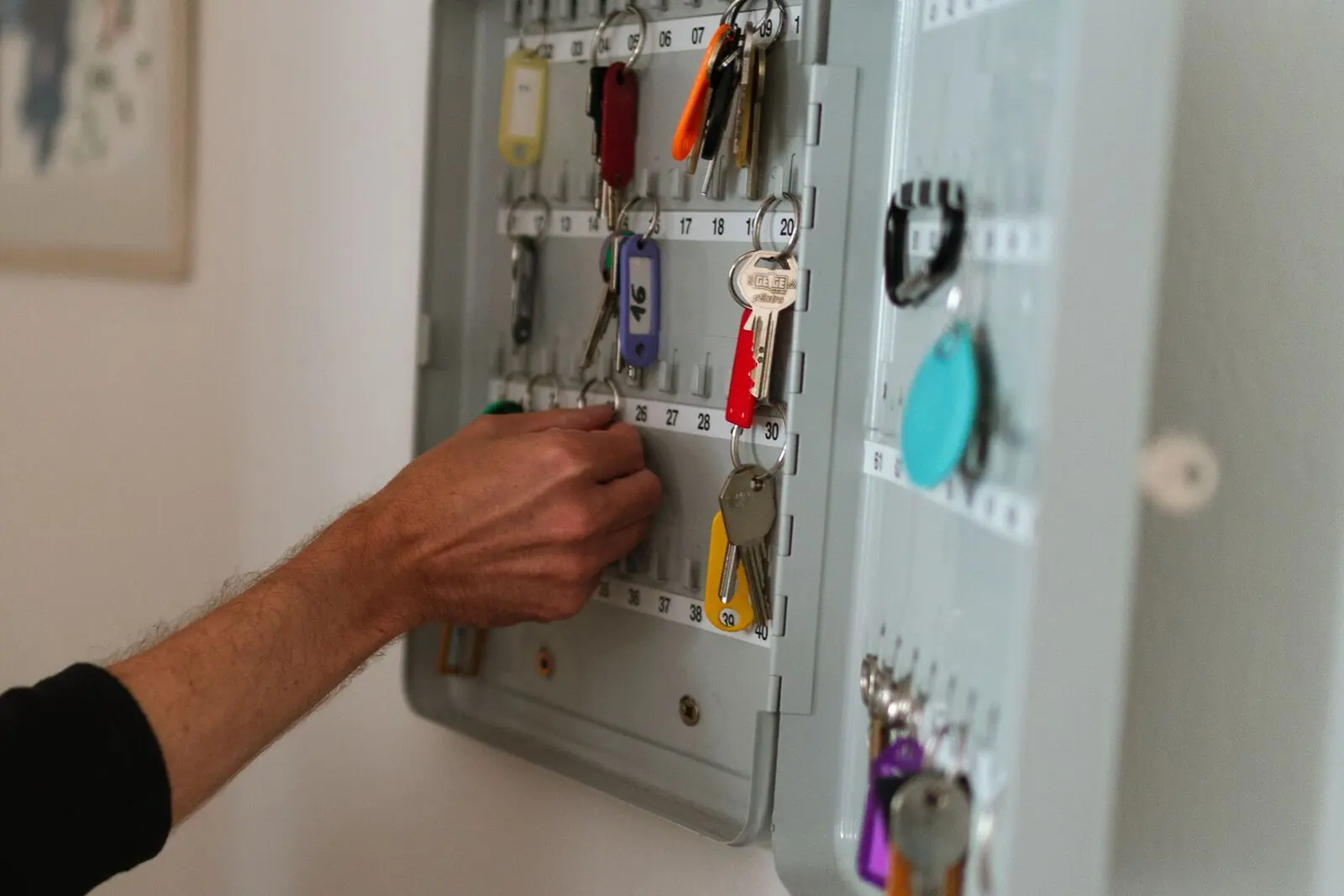
A 12-person office on a Flatiron floor: the lobby already runs on fobs, the suite door still takes brass keys, and nobody can say how many copies exist. Upgrading that one door looks simple until the landlord asks for a spec sheet and someone mentions the fire code.
The short version: for a single suite door, a keypad lever is the simplest access control installation in NYC, a smart lock adds named users and an entry log, and a card or fob reader ties the door into a managed system. Whichever you pick, the door has to open from inside without a key and with one motion, and an electromagnetic lock has to follow the specific release rules in the Building Code. Get the landlord's approval in writing before anything is drilled or wired.
Three ways to control a suite door
For one suite door, an office door access control system usually takes one of three forms. All three are keyless entry for an office door; they differ in who can change the list of people, whether you can see who came in, and what the building has to agree to.
- Keypad lever. A lever lock with a keypad on the outside, either mechanical pushbuttons or a battery-powered electronic pad. Nothing is wired into the walls. A keypad door lock on an office suite is the simplest to manage: when someone leaves, you change the code. The weakness is that a shared code travels like a copied key, and on simpler models you cannot tell who used it.
- Smart lock with an audit trail. Each person gets their own code, phone credential or fob, and the lock keeps a log of who opened the door and when. You add or remove people in an app. It runs on batteries, and remote changes need Wi-Fi or a bridge, so plan the backup; our guide to what to check when a smart lock battery dies shows why the exact model matters.
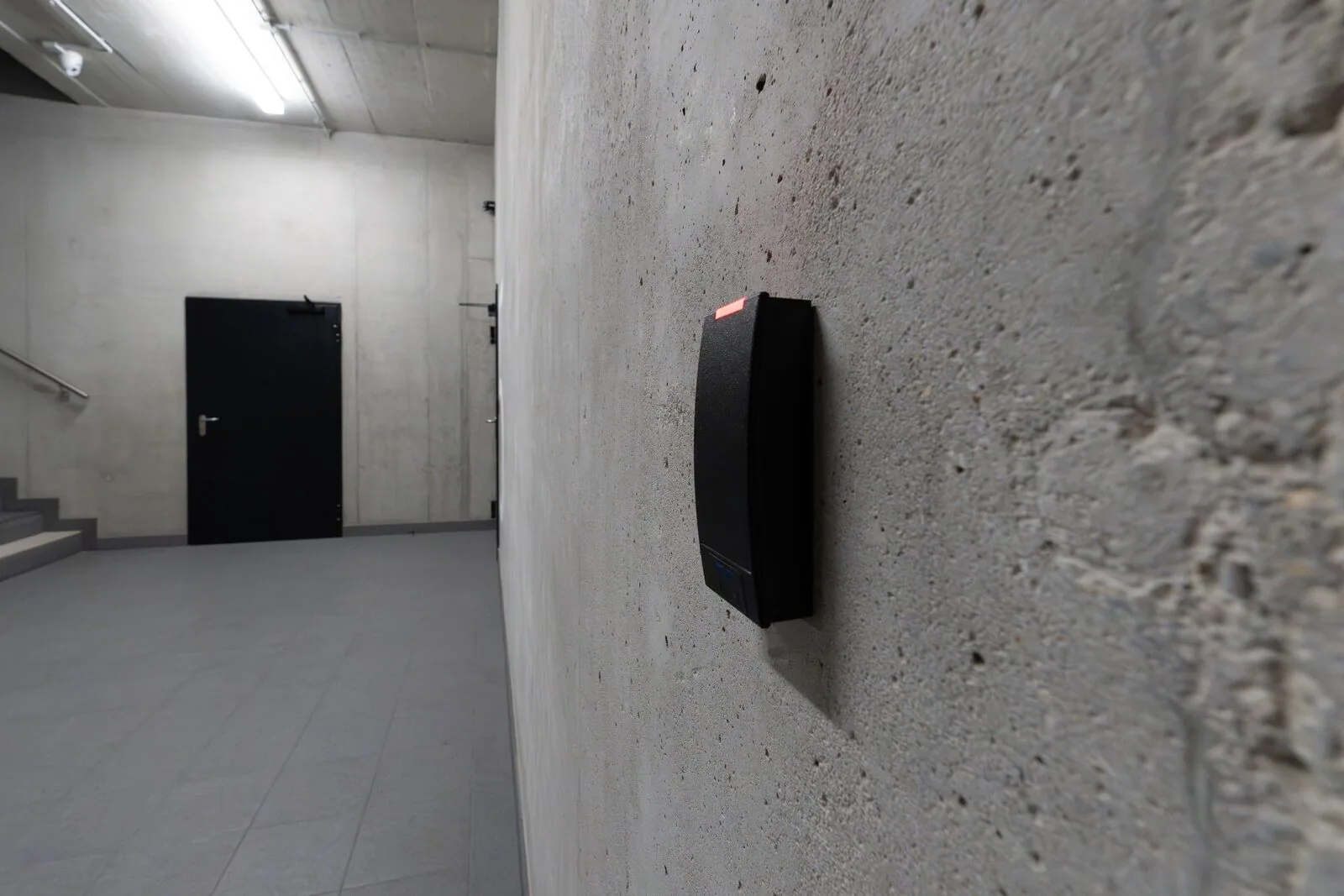
- Card or fob reader. A reader outside, a controller and a power supply, and a lock the system releases: an electric strike, an electrified lever or an electromagnetic lock (a mag lock). Credentials are issued and cancelled one by one. A fob and a card do the same job; one hangs on a key ring, the other sits in a wallet. If the building's lobby system can take your suite reader, staff carry one credential for both doors.
What the NYC Building Code says about locking an office door
Our guide to repairing or replacing commercial door locks states the exit principle in one paragraph; here is the code text behind it. The 2022 NYC Building Code places offices in Business Group B (§ 304.1 of its occupancy chapter lists "Offices"), and its rules apply to office locks in NYC whatever the technology. The starting point is § 1010.1.9 of its egress chapter: "egress doors shall be readily openable from the egress side without the use of a key or special knowledge or effort." Three details follow.
- One motion. "The unlatching of any door or leaf shall not require more than one operation" (§ 1010.1.9.5), and the exceptions (detention spaces, dwelling units and the inactive leaf of some double doors) do not cover a single office door. A separate deadbolt, smart or not, added above a latching lever means two motions to get out. Choose hardware where one turn of the inside lever releases everything.
- Levers, not knobs. On doors that must be accessible, operating hardware "shall not require tight grasping, tight pinching or twisting of the wrist to operate" (§ 1010.1.9.1). A knob-style keypad lock is the wrong pick for an office door that must be accessible.
- Kept working. The Fire Code says door hardware in the means of egress "shall be maintained in good working order at all times" (FC 1027.3.1), so a keypad lever that sticks is a maintenance duty under the Fire Code.
Mag locks and card readers: the release rules
A mag lock holds the door with an electromagnet, so nothing on the inside can open it mechanically the way a lever opens a latch. For offices and for doors to tenant spaces, the usual reader and mag lock setup falls under one of two sections, and both require the locking units to be listed to UL 294.
- Sensor release (§ 1010.1.9.8). A sensor on the inside unlocks the door as someone approaches. Loss of power unlocks it. A manual unlocking device, identified by a sign that reads "PUSH TO EXIT", sits 40 to 48 inches above the floor within 5 feet of the door, cuts power to the lock directly, and keeps the door unlocked for at least 30 seconds. The building fire alarm, where there is one, unlocks the door until the alarm is reset, and so does activation of the sprinkler or fire detection system.
- Release hardware on the door (§ 1010.1.9.9). The inside hardware has a built-in switch and an obvious method of operation in any light, and works with one hand; operating it cuts power to the mag lock and unlocks the door immediately. Loss of power unlocks the door, and where panic hardware is required, it releases the lock too.
Section 1031.8 ties the signs for "access-controlled doors" to that sensor-release section, which is where the PUSH TO EXIT sign comes from. The Fire Code adds that "Security devices affecting means of egress shall be subject to the approval of the Commissioner of Buildings in consultation with the department" (FC 1027.3.2); in the Fire Code, "the department" is the Fire Department. Before a mag lock is ordered, ask the installer and the building who obtains that approval, and get the answer in writing.
A card reader does not require a mag lock. With an electric strike or an electrified lever, the reader controls the outside, and the inside lever still opens the door mechanically, so leaving never depends on power, a sensor or a button. Installers call a lock that unlocks when power drops fail-safe (every mag lock, under the rules above) and one that stays locked without power fail-secure (most electric strikes; the inside lever still opens the door). Ask for both options when you get a quote, and ask which one is being quoted.
Access control installation in NYC: approval and wiring
Treat new hardware on the suite door as an alteration under your lease. The city's Small Business Services commercial lease guide (2017) says that while "painting and installing wall or floor coverings are unlikely to require landlords' approval, most others will," and that "The landlord will always require review and approval of alterations that require a permit or affect any building systems." Settle these in writing:
- Can your reader join the building's lobby system, or must it stand alone?
- Does the building need a key override or a credential for emergencies?
- Will anything tie into the building's fire alarm, and who does that work?
- Does the hardware stay or come off at move-out? The same guide notes a landlord "will often agree that you should only remove an alteration if it was required when the alteration was approved."
If the suite door carries a fire-rating label on its hinge edge, say so when you ask for a quote; new holes and hardware on a labeled door are a different job.
The wiring has its own rules. Administrative Code § 28-105.4.7, added by Local Law 128 of 2024, says no electrical permit is needed for wiring "designed to operate at less than 50 volts for signaling, communication, alarm, and data transmission circuits," provided the work is done "by a licensed master electrician, special electrician, or qualified person as defined in the New York city electrical code." Wiring that connects to a life safety system, which the section says includes "alarm and extinguishing systems subject to chapter 9" of the Building Code (the chapter that covers fire alarms), "shall only be performed by a licensed master electrician or special electrician." The DCWP locksmith license, for comparison, is required to "repair, service, install, inspect, and open and close locks by mechanical means" (DCWP).
So a reader and mag lock job can involve three parties: the landlord, a licensed electrician for anything that touches the fire alarm, and a locksmith for the door hardware. Our commercial locksmith service in NYC lists access control among the office work you can describe in the app.
Choosing for a small office
Match the system to how often keys change hands, not to the brochure.
- Little turnover, one door: a keypad lever, a new code at each departure, and the override key held by two people. Turnover, cleaners or contractors: individual credentials and a log, or the building's reader if it will extend its system.
- A building that already runs fobs: ask whether your suite reader can join it. One credential for the lobby and the suite is easier to issue and cancel.
Then plan the failure. Ask what the lock does when the power fails or the batteries die, where the override key lives, and who manages codes when the office manager is away. If a credential stops working and staff are stuck outside, our office lockout checklist covers who to call first and what to have ready.
FAQ
Do I need landlord approval to install access control on my office door in NYC?
Expect to. The city's commercial lease guide says most alterations beyond cosmetic work need the landlord's approval, and approval is always required for alterations "that require a permit or affect any building systems." Get it in writing, with the hardware spec attached.
Is a mag lock legal on an office door in NYC?
It can be, when it is installed under § 1010.1.9.8 or § 1010.1.9.9 of the Building Code: it must unlock on loss of power and release from inside, either by a sensor plus a manual PUSH TO EXIT device or by door-mounted hardware with a built-in switch. A security device on an egress door is also subject to the approval of the Commissioner of Buildings (FC 1027.3.2).
Do access control systems in NYC need a permit?
For the wiring, usually not: low-voltage signaling, alarm and data wiring needs no electrical permit when a licensed master electrician, special electrician or qualified person does it (§ 28-105.4.7). Wiring that connects to the fire alarm must be done by a licensed master or special electrician.
Where LockAtlas fits
For the lock side of an access control installation in NYC, such as a keypad lever, a smart lock or the cylinder and strike on a suite door, you describe the door and the hardware in the LockAtlas app and add a photo. The price is built from a service fee that varies by time of day and day of the week, a flat labor price for the job, parts if needed and 8.875% New York sales tax, and the full breakdown is shown before you book. If the technician finds something the photo did not show, such as a frame that needs a different strike, the change comes to you in the app to approve or decline. Wiring that ties into a fire alarm is a licensed electrician's job, arranged with the building. You can check the technician's name and license number with DCWP before work begins (individual licensing ends May 31, 2027, when DCWP moves to a Locksmith Business license), and when the landlord has signed off, get the LockAtlas app.

Need a Locksmith in NYC?
Use the LockAtlas app to describe the work, review the price breakdown and check your booking details.
Download the App