How a Master Key System Works for Small NYC Buildings
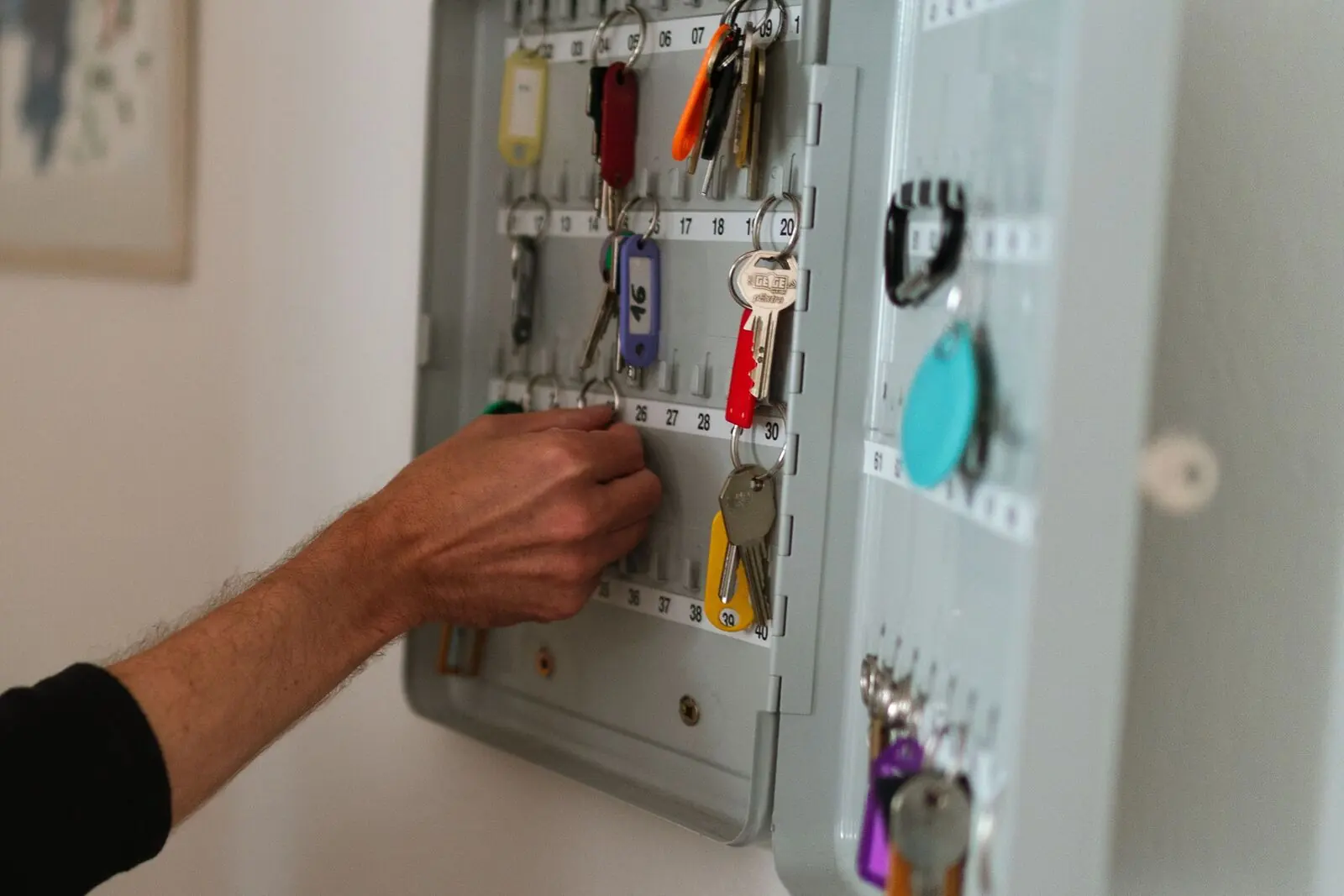
The super's ring has eleven keys on it, a new tenant wants to know who else can open her door, and a contractor needs the boiler room again. That is when a small NYC landlord, office manager or restaurant owner starts asking about a master key system.
The short version: each person gets a key that opens only their own doors, and one master key opens all of them. For a walk-up, an office suite or a shop, it is worth it when different people need different access and one or two need everything. It costs more per cylinder than a plain rekey, and it has one real weakness: if a master goes missing, every door it opens has to be rekeyed.
How a master key system works
Locksmiths describe the keys in tiers:
- Change key. The everyday key, opening one door or a small group of doors, such as one apartment or a restaurant's delivery door.
- Master key. Opens every door in a defined group, such as every apartment and common door in the building, or every office on the floor.
- Grand master key. Opens several master groups. An owner with two buildings might want one; a single walk-up or small shop rarely does.
Inside an ordinary pin-tumbler cylinder is a row of spring-loaded pin stacks. Each cut on a key lifts one stack until a gap between its pins lines up with the edge of the plug, and when every stack lines up, the plug turns. Master keying adds a thin extra pin to some stacks. That creates a second gap, so two different cut depths work in that position: one for the change key, one for the master.
That is also the trade-off. Each extra gap is another way to line a stack up, so a master-keyed cylinder accepts more key combinations than a plain one and gives up some resistance to picking, and a skilled person holding a change key can sometimes work out the master. The keys themselves matter more than they do with ordinary locks.
If you only want one key for two locks on the same door, that is keying alike, a simpler job; our piece on getting two apartment locks to use the same key explains the difference.
When it is worth it, and the catch
A master system earns its keep when the access really is layered. Three common NYC versions:
- A walk-up landlord with a handful of apartments, a street door, a basement, a boiler room and a roof door. Tenants carry their apartment and street-door keys; the owner and super carry one master instead of a ring.
- A small office suite with private offices and a supply room. Staff open the suite and their own office; the office manager opens everything.
- A restaurant or shop with a front door, a delivery door, dry storage and an office. Staff get the doors they use; the owner or manager holds the master.
It is usually not worth it for two or three doors that the same people open, where keying alike does the job, or for a business that cannot yet say who holds which key. A master system stays organized only if someone keeps it organized.
The catch: one lost master opens every door
A lost change key is a contained problem: you rekey the doors it opened. A lost master is a building-wide problem: whoever has it can open every cylinder on that level of the system, including apartments and offices they were never meant to reach. The fix is re-pinning every one of those cylinders to a new master, which is close to doing the original job again. That is why the planning below matters, starting with a master that cannot be copied at a hardware counter.
Plan the key schedule before anyone cuts a key
The key schedule is the written plan of who opens what. For a small building it fits on one page, and a locksmith needs it before quoting. List:
- Every door and cylinder you want on the system.
- Each group of people and the doors they need, for example the tenants of 2R: apartment 2R and the street door.
- Who holds the master, by name, ideally just the owner and one manager or the super.
- How many copies of each key you need.
Then decide which doors stay off the system. A cash office or safe room is the usual one, so a lost master never reaches the money. Mechanical rooms are another candidate when outside contractors need regular access: their key to a separately keyed boiler or meter room reveals nothing about your master. Every door you leave off is one you do not have to rekey after a lost master.
Put at least the master, and ideally the whole system, on a restricted keyway, so copies come only from an authorized dealer with your authorization rather than from any key-cutting counter. We explain how that works in our guide to restricted keyways and key control.
Set up the records on day one: stamp a number on each key rather than an address, keep a sign-out sheet, collect keys when someone leaves, and store the schedule somewhere locked, not in an email thread. And leave the inside of every door alone: master keying should never turn an exit into a door that needs a key to leave.
What drives the cost of a master key system
There is no honest flat price for a master key system, because the job is defined by your doors. These are the choices that move the number:
- Number of cylinders. Each keyed cylinder on the system is pinned and tested on its own. A knob lock and a deadbolt on one door count as two.
- Re-pin or replace. Every cylinder on one system has to accept the same key blank. Cylinders that already share a keyway and are in good shape may be re-pinned; mixed brands or worn cylinders usually mean replacing some. On mortise locks a new cylinder is not a new lock, as our guide to repairing or replacing commercial door locks in NYC explains.
- Restricted or standard keyway. Restricted cylinders and keys cost more and come through an authorized channel, which can add time.
- Keys and levels. Every key is cut separately, and a grand master level adds design work.
- Door condition. New pins will not fix a dropped door or a worn strike, and a technician should say so before starting.
A legitimate quote breaks down the way a rekey quote does: a visit charge, a per-cylinder charge, parts for any replaced cylinders, and the keys. Our breakdown of what rekeying costs in NYC shows that structure for ordinary locks. Ask how many cylinders the quote assumes, which are being replaced, and what each extra key costs.
Once the schedule is drafted, our commercial locksmith service in NYC is the place to describe the doors, the existing cylinders and who needs access, check availability and review the estimate in the app before confirming.
For landlords: tenants' rights still apply
Do landlords have a master key? Many do, or keep a duplicate of every apartment key, and HPD's tenant guide says that if a tenant changes the locks, "the law requires that you provide a copy of the key(s) to the landlord." Holding a key, though, is not permission to use it at will.
To the question "Can my landlord enter my apartment at any time?", HPD's tenant rights page answers "Generally no." It says a landlord can enter at any time without notice in an emergency, and otherwise at a reasonable time after appropriate notice to provide necessary or agreed repairs or services, in accordance with the lease, or to show the apartment to prospective tenants or purchasers. HPD's ABCs of Housing adds that the owner must notify the tenant in advance, in writing, of the day and time, and that the appointment must be between 9am and 5pm during the week unless the tenant agrees otherwise or there is an emergency. Urgent repairs to prevent damage or injury, such as leaking gas or water piping, need no advance notice, and any contractor or agent must be able to show the tenant that the owner authorized them to enter.
So the master is for emergencies and for visits the tenant has been told about. Make that the rule for the super, and log each use.
Hand each tenant a working key the moment their cylinder changes. HPD's guide says changing the locks on a resident's apartment without giving the resident a key violates the Unlawful Eviction Law, Administrative Code § 26-521, when the resident has a lease or has lawfully lived there for more than thirty days, unless the landlord has a warrant of eviction. The ABCs of Housing also says double cylinder locks on doors that require a key from inside the apartment are illegal and must be removed.
Tenants also keep the right to add their own lock. In a multiple dwelling, which the Multiple Dwelling Law defines as the home of three or more families living independently, § 51-c lets a tenant install a lock in their own entrance door "separate and apart from any lock installed and maintained by the owner," no more than three inches in circumference, provided a duplicate key is supplied to the landlord or the landlord's agent on request. The section excludes buildings under a municipal housing authority, hotels, motels and school or college dormitories. That lock will not be on your master, so keep numbered tenant duplicates in a locked cabinet. Our guide to rekeying legally when a roommate or ex still has a key covers the tenant's side.
FAQ
What is a master key system?
A set of locks pinned so that each person's key, called a change key, opens only their own doors, while a master key opens every door in the group. Larger systems add a grand master above several masters.
How much does a master key system cost?
It depends on the number of cylinders, whether existing cylinders can be re-pinned or must be replaced to share one keyway, restricted or standard keys, and how many keys you need. Ask for a quote that lists each separately.
Do landlords have a master key?
Many do, and HPD says a tenant who changes the locks must give the landlord a copy. A key does not authorize entry at will: HPD allows entry without notice in an emergency, and otherwise at a reasonable time after appropriate notice.
Can a master key system for an apartment building use the existing locks?
Sometimes. Cylinders that accept the same key blank and are in good condition can often be re-pinned; mixed brands or worn cylinders usually mean replacing some. A lock a tenant added under § 51-c stays outside the system.
Where LockAtlas fits
With LockAtlas you describe the doors and the problem, check availability and review the estimate in the app before confirming, and the technician is verified before they can take the job. If the technician finds something different, such as cylinders that cannot be re-pinned, the revised price comes back to you for approval before that work starts. You can get the LockAtlas app when your key schedule is ready.



Need a Locksmith in NYC?
Use the LockAtlas app to describe the work, review the price breakdown and check your booking details.
Download the App